Showing posts with label Technology. Show all posts

Wednesday, March 11, 2026

The first steam locomotive

Richard Trevithick (1771-1833), an English engineer, is credited with building the first functioning steam locomotive. He started as a mining engineer where low pressure steam engines were used to power pumps and elevators. After an acquaintance built a model of a steam powered car he got interested in the idea and decided to use a more dangerous high power steam engine to build a working prototype.

In 1801 he built his first steam carriage. Eventually, for use in the mines, he built a locomotive that ran on tracks for delivering heavy material to and from the mines. Although he had success selling his steam engines, he was poor businessman and ended up destitute.

The video below is of a replica of his locomotive in action.

Wednesday, January 28, 2026

Building a tracked scooter

A fellow named Bob builds a tracked personal vehicle. He calls it sort of a Segway, but it looks like sort of a scooter to me hence my post title. He doesn't show his design drawings, but he does cover his manufacturing methods and the steps he takes. Not everything works the way he envisioned, and so he does a lot of minor changes to get it all to work. The four videos cover the entire process of building, and then riding, the thing.


Wednesday, January 21, 2026

Building runways

This video discusses the problems and considerations of airport runway design and structure. The difference of the weight, due to fuel, of an airplane taking off and landing had never occurred to me. It is an interesting video.


Wednesday, October 08, 2025

Walking in space

Two astronauts, Peggy Whitson and Shane Kimbrough, exit ISS to fiddle about doing this and that. Seeing the station up close is interesting, we're used to seeing cheesy and rather plain movie sets with astronauts clomping around on them in magnetic 'gravity' boots or dangling from wires to simulate weightlessness, but the actual surface is quite detailed. The amount of external cabling surprised me, and I imagine it would horrify IT network engineer types with its sometimes rather haphazard looking routing. Also, since gravity isn't an issue, the station spreads out in a far more organic manner, with the modules, solar panels, and what-not laid out as needed. 

There was, in a couple of shots, what looked like debris of some sort that was orbiting in proximity of the station. Were I ever to do an ISS spacewalk, that debris would probably include my space suited body when I forgot to secure my safety harness properly and floated away to my doom.  

I gave it my 'walking in cities' tag. There is no city, and for that matter no walking, but it's close enough I guess.


Wednesday, September 24, 2025

The electron microscope

The above video explains the workings of electron microscopes. A beam of emitted electrons is guided and shaped into a focal point by a lens of electromagnets. There can be multiple electromagnet lenses to further focus the beam. Eventually they can narrow it down to resolving individual atoms. It was not clear to me how the image was captured, but then again, most of the details of it all passed well over my head.  

It reminded me of the 1957 movie The Incredible Shrinking Man. In it the hero, Scott Carey, is exposed to a radioactive cloud while out sailing. This causes him to start shrinking a few days later. As he continues to get smaller his shrinkage starts to ruin his marriage (insert your own joke here) and, when word of his condition leaks out, it turns into a media circus. He gets small enough to move into a doll house. Unfortunately for him, his pet cat spots him and decides he would make a tasty appetizer. In escaping the cat, he falls down the stairs into the basement and is too small to climb back up. He monkeys with a mouse trap to get some cheese to eat and is interrupted by a giant spider -- well it is a giant to him -- and has to battle it for the cheese. Below is the ending, where he climbs through a screen and ponders his fate. It is a good, albeit very odd, movie. 

Wednesday, July 09, 2025

A firetruck

This video shows a pumper truck commonly used by firefighters. It explains the layout of its pumps, water tank, equipment, hoses, ladders and the cab. From the comments to the video a lot of firefighters seemed impressed by how well he described the truck and its loadout.


Wednesday, April 09, 2025

Nuclear cooling towers

This video discusses hyperboloid shaped nuclear cooling towers and explains how they operate. He builds a clear model of one so you can see how the water and air flows within it to cycle cooled water back to the reactors. He also briefly discusses other methods of cooling nuclear power plants.   


Wednesday, January 15, 2025

Electricity in wires

Earlier I did an art post about telephone poles and power lines. This video discusses how power is distributed down those lines in the most efficient manner.


Wednesday, January 01, 2025

On to the future!

Click image to enlarge

Another new year, and another step towards a more glorious future for humanity. However, there have been a couple of hiccups along the way. For example, old-timey futurists promised a world full of conveyor belt sidewalks that, aside of an airport here and there, have failed to materialize. 

I know I feel like a chump every time I have to move my feet to get from point A to point B. Come on, is this the Neolithic Age or the 21st Century? It is well past time that our engineers stop wasting their energy on rocket ships, quantum computers and robot sex dolls and get cracking on conveyor belt sidewalks. A brighter future for our children demands it.


Sunday, December 08, 2024

Popular Mechanics covers

Click any image to enlarge

Popular Mechanics, first published in 1902, is a magazine that focuses on science, technology, machines, DIY projects, cars, planes, rockets, tools and the like. At one time it was widely read, but as with most periodicals, the internet has cut into its domain. It is still published. Its articles about future cutting edge technology were frequently ridiculous, and from the looks of things that hasn't changed.

These images of covers from the 20th century are from the Internet Archive. There are many more covers in their archive.

Sunday, December 01, 2024

Telephone poles and power lines

Click any image to enlarge

The first power plants were built in 1882. They produced the electricity which was then distributed by a grid of wires. Since then, the power stations and the grid to support them have expanded enormously. Power lines are a ubiquitous and little considered part our landscape. Of course, power lines and the poles that support them have been captured by artists, sometimes as an aside in a landscape painting, sometimes as the main subject.

Wednesday, June 26, 2024

Analog and digital

The word 'computer' after analog and digital implies more of a connection than is probably warranted. It would be like always sticking 'motor vehicle' after cars or airplanes. Yea, they get you there, but they do it in vastly different ways. Anyway, this is a good discussion of the two means of computing.


Wednesday, April 10, 2024

The puzzle of mechanical stitching

I had never considered the complexity of the problem engineers faced in designing a sewing machine. With hand stitching, you push down through the fabric and the reverse the needle to push back up through again drawing the thread along. Sewing machines simply push the needle up and down without reversing it, so new methods of sewing needed to be designed. 


Sunday, April 07, 2024

Old-timey gas pumps

Click any image to enlarge

These are images of old gas pumps. Being a new technology at the time, their design and methods of usage had yet to be standardized. These are from the Flashbak post The Industrial Beauty of Vintage Gas Pumps. There are more examples at that link. 


Wednesday, January 17, 2024

Railroad crossings

We've all sat at railroad crossings watching a train go by. I'm always struck by the fact that the graffiti artists are generally careful to avoid painting over logos, reporting marks, and other codes on the cars. It is a dance between the railroad companies and the graffiti painters. One thing I don't think about is how the crossing signals work, I just take them for granted. The above video discusses that, and it is interesting what they have to do to get the whole process to work properly.  


Sunday, January 07, 2024

Monorails in art

Click any image to enlarge

Because they are associated with sleekness and modernism, Monorails have a cachet in certain circles. Originally presented as a competitor to traditional rail, their limitations have reduced them to competing, none too successfully, against buses and light rail in urban areas. 

While a lot of monorail art is representational, a lot of earlier monorail art leans into the futurism monorails offered. The futuristic cities are always entertaining.

I have posted about monorails before. The most recent being Boynton’s Bicycle Railroad, about an early attempt to run a monorail, and earlier about the Shonan Monorail, which is a small commuter monorail in Japan. 

Wednesday, November 15, 2023

A new hobby idea for the winter

With winter nearing I'm sure that many of you, those who are too stupid to live in pleasant climes, will be stuck in your houses looking for a winter hobby to occupy your frigid and dreary hours. May I suggest making miniature chain link fences? It's kind of like knitting, only instead of a sweater you get a tiny chain link fence for your efforts. A great addition to your daughter's dollhouse or any diorama you may be building.

Above is a home-built machine to make the chain links. I chose it because the machining of it was so nicely done. If you look around the internet you can find much simpler contraptions to do the same thing. 


Sunday, October 29, 2023

Boynton’s Bicycle Railroad

Click any image to enlarge 

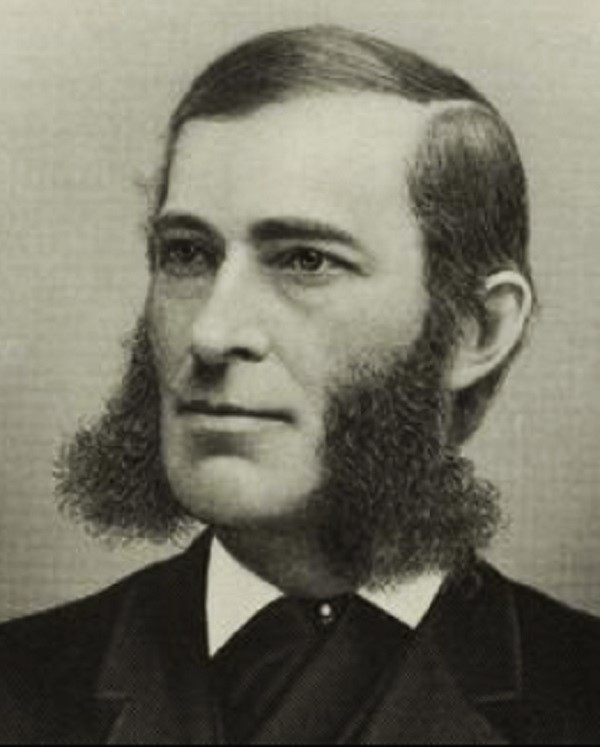
In the 1880s Eben Moody Boynton acquired an old set of railroad tracks on Long Island running between Gravesend and Coney Island. He used this set of tracks to create the Boynton’s Bicycle Railroad which started operation in 1890. It was the first monorail. The locomotive and cars sat atop a single line of wheels and were stabilized by an overhead guiding beam. The train was narrow, allowing both tracks of the conventional rail line to be used at the same time. It operated for two years.

Eben Moody Boynton


Wednesday, October 11, 2023

Seeing sound

I've posted about sound and vision before with a 19th century Welsh singer's attempt to visualize sound, as well as a method to recreate sound from video by analyzing minute vibrations recorded. In this video an array of microphones acts as an acoustic lens to capture sound, which is then displayed on an image. This allows designers to study which components of a device are creating the sounds. He also demonstrates by showing the sound locations of an echo. 


Wednesday, October 04, 2023

The mechanics of pumping gas

A good description of the workings of the automatic shutoff of a gas pump nozzle when the tank is full. In the comments weehoo4430 elaborates:

I’m an engineer and I used to work for the company that originally created that design. Actually, I redesigned that ball bearing mechanism. I can confirm that you are correct in your assessment of how it works. Also, most gas nozzles have a second diaphragm or plunger (not membrane) that deflects when there is pressure in the fuel line. It is used for prepay fill up. When you hit the prepay amount the dispenser shuts off, the pressure in the nozzle drops and that second diaphragm which is spring biased up will move and shut the nozzle off. There is a third shutoff in some nozzles that is called an attitude device. When a … moron… pulls a flowing nozzle out of a car’s fill pipe, a ball bearing blocks the pickup tube and shuts the nozzle off.