-------------------------------------------
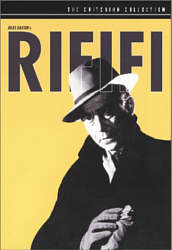
In a lot of ways Du Rififi chez les Hommes—or Rififi as it is more commonly known—is the perfect movie. It is the product of many good people working at their best to create a whole far greater than the sum of its parts. It is shot with beautiful cinematography that captures the urban sprawl of Parisian streets and the smoky glamour of the criminal underworld in equal measure. It is brilliantly acted. All the movie's characters are given a depth that makes them simultaneously feel as large as the inhabitants of Greek myths and as ordinary as people you see in the street. Jean Servais is particularly amazing as the lead, giving a performance here that proves he was as capable as Bogart as a noir anti-hero. The screenplay is perfectly paced and replete with subtly brilliant lines—like when gangster Jo le Suedois's wife tells him that he is one of millions who suffered an unhappy childhood, and it is the others, and not he, who are truly tough guys. And the movie's plot is strong and full of twists while never becoming too much to handle. But for all of its brilliance in these departments, what really sets this film strongly on this side of the classic film line is its direction.
Blacklisted American director Jules Dassin (who apparently only made the film for the money) creates something so revolutionary with such understatement that it is still difficult to identify what sets it apart from the rest of its breed. It isn't just the movie's brilliant pacing, in which not a second is wasted, and no element is introduced that does not pay off with interest by the film's end. Nor is it Dassin's mastery of all the ingredients I mentioned above—script, location, cinematography, character development, plotting, and acting. It is clear that Dassin is a master working at the peak of his game, but that alone isn't what makes this movie what it is. Perhaps it is Dassin's unique circumstance, his need for a job coupled with his entrance into the culture of a new country. Perhaps this is the place where the American work ethic meets French ennui. Where Bogart meets Camus.
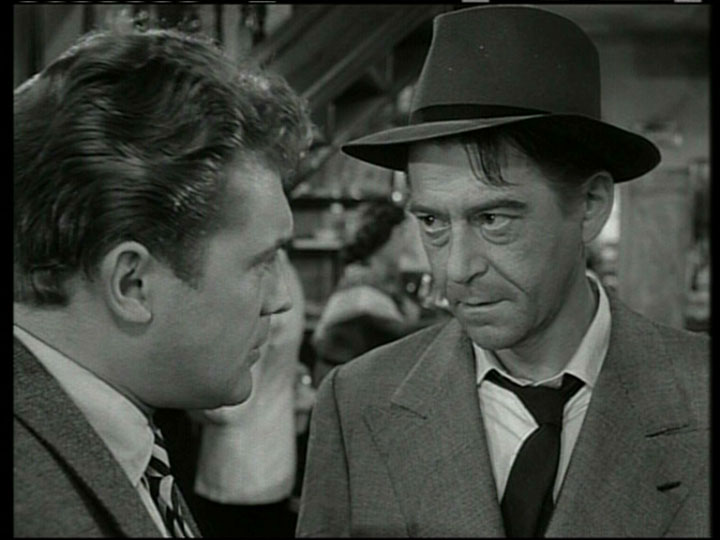
Whatever it is, something in this film makes it undeniably brilliant. It manages to retain a staying power that keeps it as fresh and exciting today as when it was first released. It is without doubt a film that helped spawn both the genres of heist film and the French New Wave. It remains smarter and more human than anything in the former category and cooler, quicker, and more exciting than anything in the latter, while simultaneously giving homage to the Forties' noirs on both sides of the Atlantic that preceded it. It is one of those classic works that immediately becomes the rule by which everything that follows will be measured. And it does it all so smoothly that you hardly notice what has happened until it's all over.
The film's plot follows a thief named Tony le Stephanois who was recently released from prison (Servais). After finding no solace in gambling or confronting his former girlfriend who helped put him away, he reluctantly agrees to rob a jewelry store with his old friend Jo le Suedois (Austrian born Carl Mohner). The two work to assemble a crack team, and to discover the secret of bypassing the latest alarm system with which the jewelry store is equipped.
Although the plot is pretty standard, Dassin works overtime to make it shine. He crafts a careful theme that hinges around a thief's code and his debt to the innocent. And he makes even the seemingly superfluous bits count—like the inclusion of an umbrella in the heist, which is both funny and thrilling. The heist itself is one of cinema's classic scenes and it is to Dassin's utmost credit that he shoots it in almost real time, taking 32 minutes while hardly using a sound, and that each second is utterly captivating.

If the film can be faulted for anything it would have to be for its lack of a vastly important theme. The idea that something can be done perfectly, but fail due to the inhumanity of others (you'll have to see it to find out!), while interesting is hardly as deep or as broad-reaching as any of literature's great works. The film may also suffer from a little too much focus on revenge for being ratted out. (A motif that a bitter Dassin may have included in retaliation for his having been blacklisted.) These minor complaints aside, this is an unbelievable film. It has immediately clawed its way to the top of my favorite movie list. It is a brilliantly formulated noir, exquisitely crafted, with a tough but human core. If you have never seen Rififi I suggest you work to change that.