 |
| Click any image to enlarge |
These examples, and those after the jump, are from Duke University's Digital Repository. There are more at the link.


|
| Click any image to enlarge |
 |
| Click any image to enlarge |


 |
| Click image to enlarge |
 |
| Click any image to enlarge |


 |
| Milton visiting Galileo (click to enlarge) |
Almost every time we get together with family or friends, the conversation ends up being about food. - Steve Chen
 |
| Mathias Rust landing at Red Square in 1987 (click to enlarge) |
Around 7:00 p.m. Rust appeared above downtown Moscow. He had initially intended to land in the Kremlin, but changed his mind: he reasoned that landing inside, hidden by the Kremlin walls, would have allowed the KGB to simply arrest him and deny the incident. Therefore, he changed his landing spot to Red Square. Heavy pedestrian traffic did not allow him to land there either, so after circling about the square one more time, he was able to land on a bridge by St. Basil’s Cathedral. After taxiing past the cathedral he stopped about 100 metres (330 ft) from the square, where he was greeted by curious passersby and was asked for autographs. When asked where he was from, he replied “Germany” making the bystanders think he was from East Germany; but when he said West Germany, they were surprised.Rust was released early and went on to live an eccentric life. In 1989 he fell in love with a West German nurse, only to land in jail again when he stabbed her when she rejected his advances. He was released after 15 months, converted to Hinduism and was engaged to the daughter of an Indian tea merchant. He got in trouble with the law again in 2001 and 2005. Currently he claims he is an advisor for an Swiss investment bank and is still a peace activist of sorts.
Rust was arrested two hours later. He was charged with several violations, the most serious being that he had illegally entered Soviet airspace. Rust argued that he was merely trying to promote world peace. He carried with him copies of a plan he had developed for a worldwide democracy, which he referred to as “Iagonia”. Rust’s trial began in Moscow on 2 September 1987. He was sentenced to four years in a general-regime labor camp for hooliganism, for disregard of aviation laws, and for breaching the Soviet border.
 |
| Click any image to nelarge |


 |
Finnish cavalry stunt from the 1930s
(click to enlarge, from Hippodrome Almaty) |
If there hadn't been women we'd still be squatting in a cave eating raw meat, because we made civilization in order to impress our girlfriends. - Orson Welles
 |
| Click any image to enlarge |
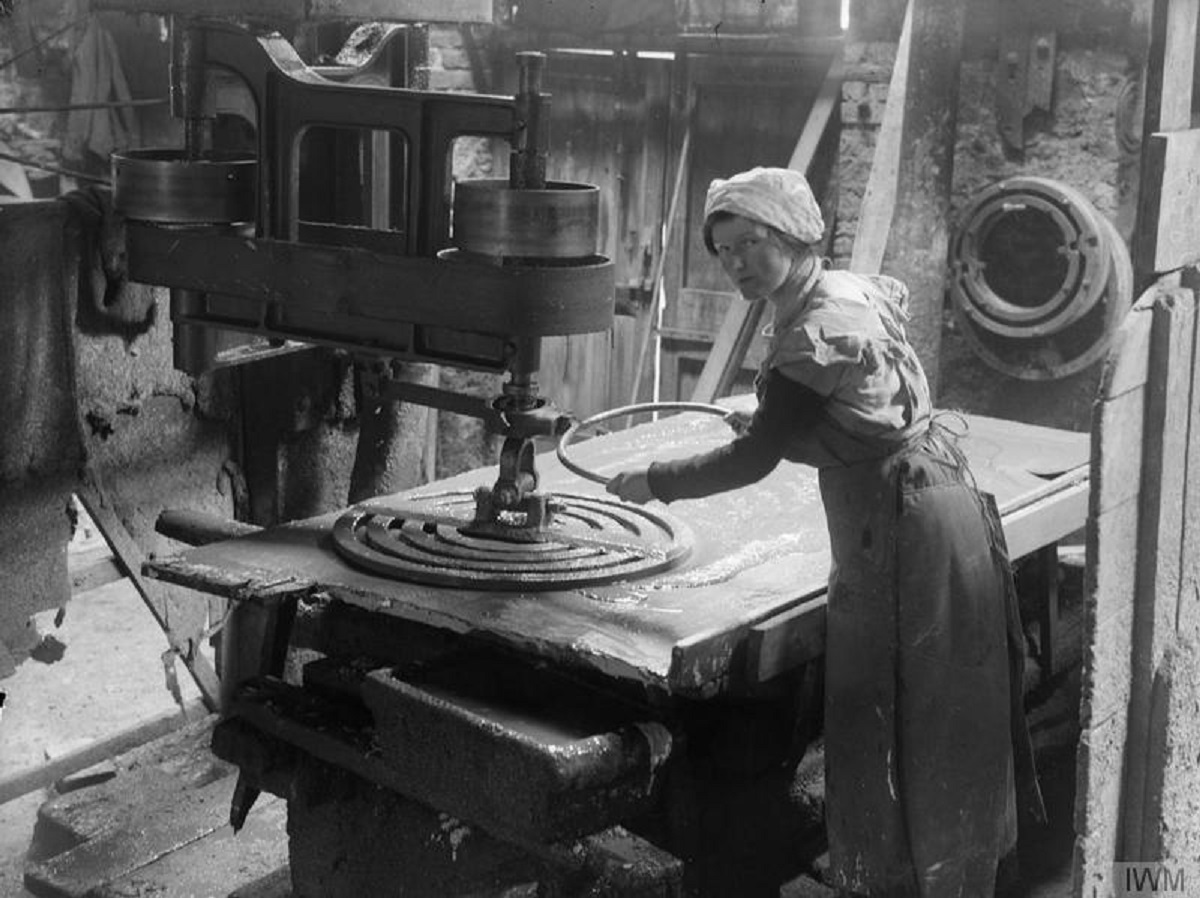
The Ralph Sr. and Sunny Wilson House represents a hybrid of ranch and modern-style home architecture. The open interiors and U-shaped plan reflect the influence of the California Case Study House - a series of architectural experiments from the early 1940s and 1950s that were offered as better solutions for residential living.There are more images after the jump, as well as more information and pictures at: Wilsonart's The Wilson House, Mid-centuria's The Wilson House: A Laminate Laboratory and Roadside Wonders' The Wilson Laminate House.
The interiors of the Wilson House feature extensive use of decorative laminates in innovative applications, most of which had never before been seen in the home. The kitchen countertops reveal some of the earliest work in post-forming, a process where laminate is bent and wrapped to form continuous curves from the top to the side edge of the counter. Other applications include laminate clad built-in cabinetry in the kitchen, laundry, and bathrooms—even in the shower! The house also boasts some of the earliest undermount sinks in laminate tops – considered an innovation even today. While these types of installations are commonplace now, they were virtually unheard of in the late 1950s.
The Wilson House was featured in Ralph Wilson Plastics Company advertisements, as well as in the editorial pages of the nation's top trade magazines. It represented an ideal of design for affordable and fashionable residential housing and had a profound influence on future uses of laminate. Today, the house stands as one of the best residential examples of the mid-century modern style in the state of Texas.


 |
| Click any image to enlarge |
“In about the middle of 1947, a suggestion was made to me that I might watch an operation in a hospital. I expected that I should dislike it; but from the moment when I entered the operating theatre I became completely absorbed by two things: first, the extraordinary beauty of purpose and co-ordination between human beings all dedicated to the saving of life, and the way that unity of idea and purpose dictated a perfection of concentration, movement, and gesture, and secondly by the way this special grace (grace of mind and body) induced a spontaneous space composition, an articulated and animated kind of abstract sculpture very close to what I had been seeking in my own work.
From the very first moment I was entirely enthralled by the classic beauty of what I saw there; classic in the sense that architecture and function were perfectly blended and purity of idea and grace of execution were in complete harmony.”Considering how abstract her sculptures are, it is interesting to see her drawings. It is striking how detailed her faces and hands are, while the rest of the image is barely sketched.


 |
| click any image to enlarge |


 |
| Toilet paper roll, patent: US465588 (click to nelarge) |
She’s a manner of speaking. Even the flowers don’t come back, or the green leaves. There are new flowers, new green leaves. There are other beautiful days. Nothing comes back, nothing repeats itself, because everything is real. - Alberto Caeiro
 |
| Click any image to enlarge |


 |
| Click any image to enlarge |
Imagination is our window into the future. At NASA/JPL we strive to be bold in advancing the edge of possibility so that someday, with the help of new generations of innovators and explorers, these visions of the future can become a reality. As you look through these images of imaginative travel destinations, remember that you can be an architect of the future.There are more posters after the jump, and a few more. as well as more information and larger size downloads, at the JPL link.


[Li ZiQi is] a girl who lives in the mountains and forests in the village of northwestern Pingwu, Mianyang City, Sichuan Province, China.Additional information, including biographical information and a brief interview of Li ZiQi, can be found at Li ZiQi - A Modern Chinese Fairy.
Li Ziqi didn't own happy childhood. When she was a child, her parents got divorced and her father died early. She started living with her grandparents. Their life was poor but affordable. Li Ziqi's grandfather was a cook in the village. When there was a ceremony going on, such as a wedding or a funeral, her grandfather would be in charge.
In her videos, she shows how to cook various dishes, which she had learned from her grandfather. Besides cooking, she also learned how to make bamboo baskets, grow vegetables, and make carpenter handiworks.
----------
Li Ziqi's works convey a positive attitude toward life. Ziqi's videos can help people fulfill the "dreams of the countryside."
These are the dreams of many people at home and abroad, especially Chinese people. Many people show great interest in Li Ziqi clothing. In front of the camera, she always appears in a set of Chinese Han clothing which is made in rough fabric.
Also, her videos help more people learn and understand Chinese traditions and culture. The spirit of struggling for independence and self-reliance conveyed by her life experience has attracted great attention at home and abroad.
 |
| Click any image to enlarge |


 |
| Click to enlarge |
 |
Viewing Rembrandt's The Night Watch
(click image to enlarge)
|
On 8 July 2019 the Rijksmuseum starts Operation Night Watch. It will be the biggest and most wide-ranging research and conservation project in the history of Rembrandt’s masterpiece. The goal of Operation Night Watch is the long-term preservation of the painting. The entire operation will take place in a specially designed glass chamber so the visiting public can watch.
Never before has such a wide-ranging and thorough investigation been made of the condition of The Night Watch. The latest and most advanced research techniques will be used, ranging from digital imaging and scientific and technical research, to computer science and artificial intelligence. The research will lead to a better understanding of the painting’s original appearance and current state, and provide insight into the many changes that The Night Watch has undergone over the course of the last four centuries. The outcome of the research will be a treatment plan that will form the basis for the restoration of the painting.
 |
| Click any image to enlarge |


