The
Huang Qing Zhigong Tu
is an 18th century Qing Dynasty work that details the various ethnic
minorities and foreign tributaries. The Qing Dynasty extracted internal and
external tributes, and this work documents the various groups they dealt with.
As well as East Asian groups, Europeans were portrayed as also providing
tribute and being in effect vassal states.
Century of Humiliation, here we come.
The ethnography of the Huang Qing Zhigong Tu was probably influenced by
Western ethnographies of the time. Prior to the advent of photography, painted
or engraved images were the only way of portraying foreign people and dress.
In fact, I wonder how much of a part photography played in modern art's
turning away from representation to its more abstract and symbolic nature
today.
Japanese pirates were call Wakō. While originally entirely Japanese, later they included Chinese, Philipino and other southeast Asians. The video is a good history that covers the growth, spread and the ebb and flow of the Wakō's fortunes (as well as a fight over a slave girl mentioned in passing, a seeming constant of history when it comes to warriors).
This is a review of the 2017 Chinese action/comedy/propaganda film
China Salesman. I don't
know if you can find it online, I bought the stupid thing for this post (I
need to work on my money management skills). There will be spoilers in this
review.
It stars Dongxue Li as a salesman for a Chinese telecom company which is
bidding for a contract to sell superior Chinese 3G telephone equipment to an
African country. Opposing him is an Eeeeevil Western telephone company that's
trying to win the bid so they can tank the country's phone network, thereby
restarting a civil war so's they can sell arms to both sides. Diabolical
Westerners, hiding their illicit arms trade behind a telephone company!
If battling phone companies seems like an odd premise, bear in mind that this
was made around the time that Huawei's reputation
was swirling down the drain, so much of the nonsense in this film is just
touting the wonders of Chinese 3G technology compared to the junk the
Westerners put out.
The producers of the film also planned an international release and so, to
bolster its overseas box office, they cast two huge Hollywood action stars --
Steven Seagal and Mike Tyson. OK, maybe 'huge Hollywood action stars' is an
exaggeration, although in Seagal's case, considering his ample girth, huge
certainly fits.
Ms Ling and the China Salesman, who can't afford a radio phone to
call their headquarters, whine about not being taken seriously
We are introduced to the China Salesman and his assistant Ruan Ling as they
are riding into the capital city on camels. Driving past in a fancy car are
Susanna, the blonde woman who is running the bidding, and Michael, the
salesman for the Eeeeevil Western phone/weapons dealing company. That seems
like a bit of a conflict of interest to me, but what do I know? Susanna and
Michael, from the comfort of their air-conditioned car, smirk at the two
Chinese yahoos on their camels.
Later, while the Westerners settle into luxurious accommodations, the China Salesman and his sidekick open up their old regional office in the Capital. It
is dusty and pretty run down looking. At one point the China Salesman even
complains to Ling that they don't have a radio phone to call their
headquarters in China. Wait, this movie is promoting the wonders of Chinese 3G
telephony, and these two boobs can't even call their headquarters?
We then cut to a bar ran by Steven Seagal. It's kind of like Rick's bar in
Casablanca, but instead of Humphrey Bogart you get Seagal waddling around.
He's tasting some hootch from a barrel, declares it to be good and hands over
crates of guns he's trading for the booze. Now, I'm not an international arms
dealer, but it strikes me that Seagal got the short end of the stick trading
of all those automatic weapons for only a few gallons of whiskey.
Then, who should happen to walk in but Mike Tyson. His backstory is that he is
a fearsome African Chieftan. However, unfortunately for him his entire tribe
was massacred and exterminated. His big ambition is to reconstitute his tribe.
How he plans on doing that when they're all dead is a mystery - I guess he's
just an optimist.
Tyson, Seagal, and Seagal's stunt double duke it out (image from
Film Threat)
Since there are two high alpha action stars in the same bar a fight is
inevitable. One problem is Seagal is in his 'beached whale' phase so all he
can do is sit and wave his arms around as he does some fearsome chair-fu.
Meanwhile, Tyson wants nothing to do with that, he just wants to run around
punching people. To solve the problem of providing a mobile Seagal for the fight they hired the world's skinniest stunt double to do the duty. The three of them bust up the place, crashing through walls and demolishing all props in sight.
When the required amount of promotional video has been filmed, the fight ends with a Tyson victory. Seagal, his contract completed, thankfully largely disappears from the show. Tyson continues as a minor character with an amusingly absurd faux-African accent that changes from scene to scene.
The movie's plot is pretty much of a mess. It stitches together over-the-top action sequences while pumping the superiority of Huawei telephones, whining about the lack of respect for China, blathering about the incomprehensible civil war, displaying supposed African culture, and revealing devious Westerners. My favorite Tyson appearance was at one of the innumerable, technobabble infused telephony negotiation sessions. Tyson crashes through the front door in an armored personnel carrier and touches off a massive gunfight. Way to negotiate Mike.
Who needs guns when you have a Chinese flag?
Another ridiculous scene is when the China Salesman needs to get to the south to repair a vital telephone relay tower. However, there is only one mountain pass they can use to get there, and currently that pass is being blocked by the two warring rebel factions who are engaged in a massive firefight. Trying to solve this conundrum, the China Salesman thinks for a bit and then gets a brainstorm. He breaks out a gigantic Chinese flag, mounts it on the back of his truck and starts to drive through the pass. Hilariously the rebels all stop fighting and instead stand up and start shouting "Its China!", "China good!", "Yea for China!" so the China Salesman can make it through the pass. Yea, that sounds plausible.
Would I recommend you watch it? If you can get it for free the plot is preposterous, and it is stuffed full of ludicrously transparent propaganda. Still, it is a hoot and entertaining in a crappy B-movie sort of a way.
The above video shows a family in Yunnan, China harvesting, processing and cooking with sugar from the sugarcane. It is obviously a staged cooking show, but it is nicely filmed and put together. If you are a diabetic, you may have a rise in your glucose levels just from watching it, but they do whip-up some tasty looking food and treats.
Because of the Great Firewall China controls what is posted on Western platforms. China carefully curates it image, preferring to portray themselves as sparkling and modern. Hence the endless shots of high-speed rail, robot delivery vehicles, brand new buildings and so forth.
Logic tells you there is something Potemkin-villagey about all that. Aside from that, a lot of Chinese street videos are nothing more than collections of pretty Chinese girls aimed at Western simps, so finding a good walking in cities video was a bit of a challenge.
The above is a walk through what appears to be middle class neighborhood in Wuhan, China (insert your own covid joke here). I think it is morning, the shop keepers are setting up their stalls and storefronts. He wanders through several streets and alleys. One thing that is striking, a lot of the vehicles and almost all of the scooters are electric, so the traffic sound is much quieter.
As an aside, the video was posted about a month ago. Since then, the upper Yangtze River basin has had a lot of rain and experienced heavy flooding. The Wuhan riverside area was flooded, and some of the interior streets as well.
On this July 4th Eve, which some people unimaginatively call July 3rd, we have a video of Chinese firecracker and fuse factories. For the most part the work is dirty and looks to be tedious piecework. I hope they get paid a decent salary. Give a thought to these poor worker bees as you light the fuses on your fireworks tomorrow.
It is a little odd for me to do back-to-back posts, but the current flooding in China is horrific. A couple of typhoons hit northeast China. The flooding was already bad, but then Peking, including the Forbidden City, started to flood as well. The CCP (Chinese Communist Party) couldn't have that, so they opened flood gates and completely swamped the surrounding cities and villages. This obliterated a lot of their homes, businesses, farmlands and the current crops.
The officials haven't done much of anything but film propaganda videos supposedly showing their amazing rescue efforts. Meanwhile, food and goods that have been donated for the people in need have been taken and locked up in warehouses where they'll no doubt turn a tidy profit for corrupt officials. Needless to say, the people are not happy at all.
It's all quite horrible. It brings to mind the Mandate of Heaven, the Confucian version of the Divine Right to Tule, and how it can be revoked. These are ideas that still have some purchase among the Chinese.
Mencius pointed out that "Heaven does not create people for the sake of the sovereign. Heaven made the sovereign for the sake of the people". The ruler must, therefore, at all times be guided by the principle of benevolence or jen. He is both the mother and father of the people. Further, if there were suitable omens such as floods and droughts and the ruler was proving less capable of fulfilling his mandate than he ought to have been, then Mencius considered it legitimate for the people, if not actually to overthrow their ruler and find a new one, then at least to show their disapproval through rebellion and protest. World History Encyclopedia.
These images are from a late 19th Century album, One hundred portraits of Peking opera characters, showing the costumes and characters from Peking operas. The collection is housed in the MET. The operas feature mythological, historical and social themes and have elaborate costumes, masks, singing, dancing, acrobatics, and stylized martial arts. To western ears the music is jangling, and the high-pitched timbre of the singing can be off-putting.
There are more images after the jump, and the full album can be viewed at the above link.
Snuff is dried and powdered tobacco. In usage a small amount is inhaled through the nose. While Chinese of the Qing dynasty had outlawed smoking tobacco, they considered snuff to be medicinal and it was widely used. Snuff use started with the upper classes, but soon spread to other segments of society. In fact, it became common to offer snuff to others in social settings.
Europeans used snuff boxes, but the Chinese preferred bottles which had a tighter seal and could keep moisture out more effectively. These images are of old Chinese snuff bottles, primarily from the Qing dynasty period. There are more after the jump, and more at Picryl's collection of snuff bottles where I found these images.
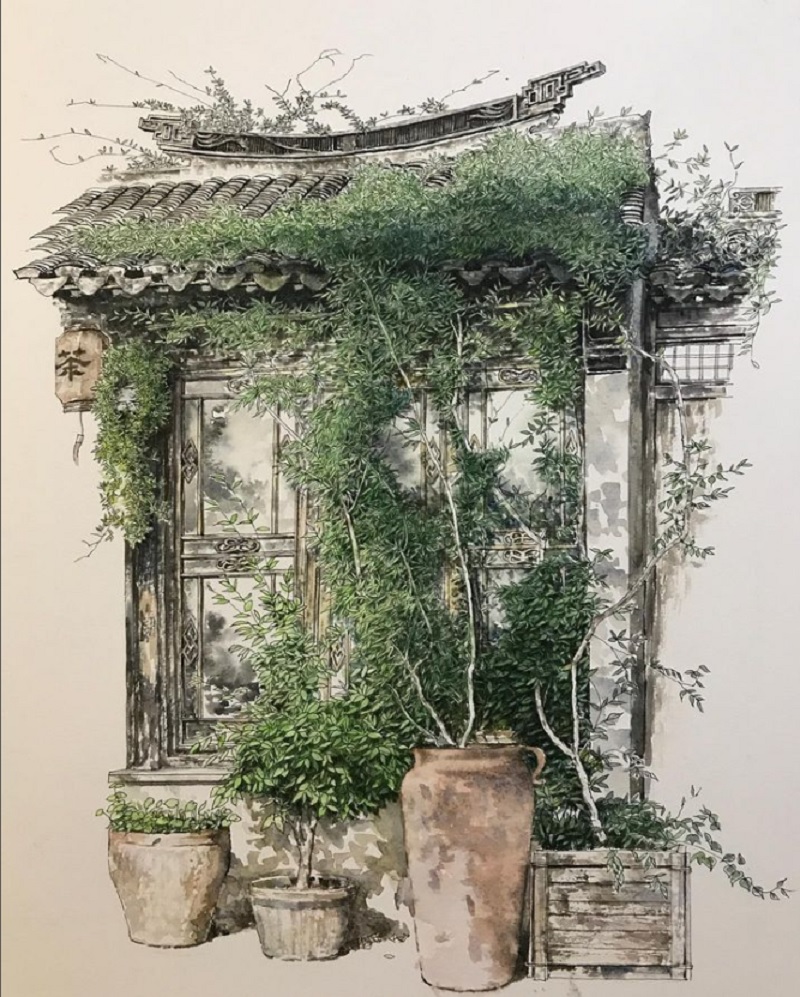
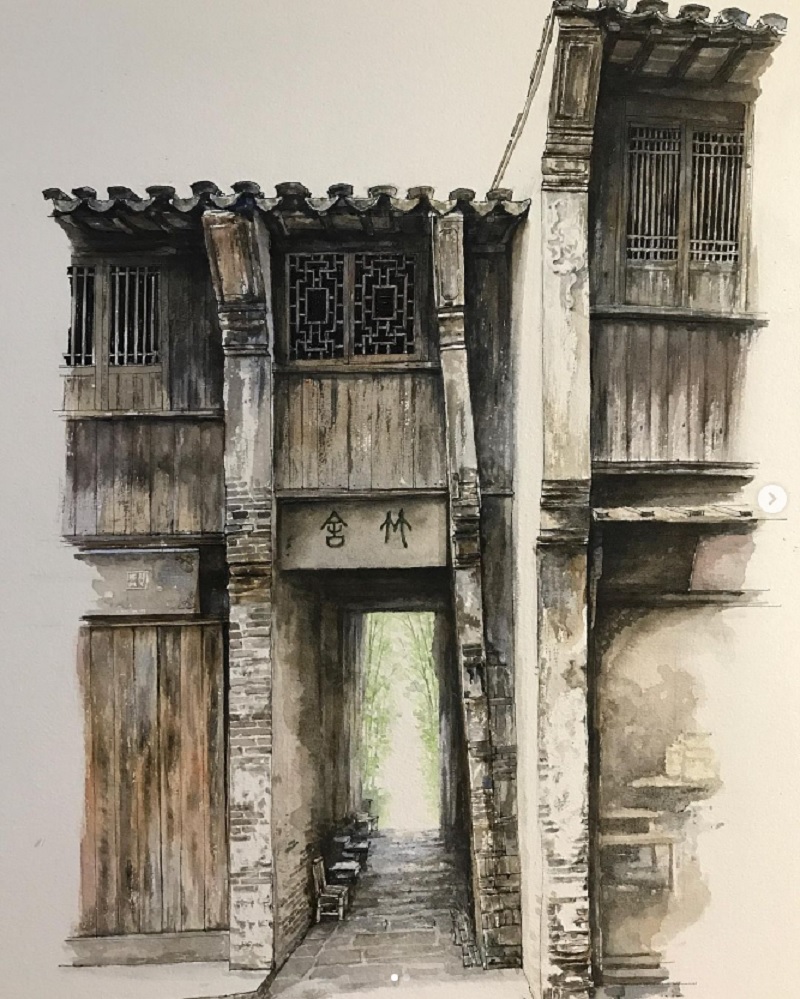
Ma Xiaowei is a Chinese artist who works in ink and watercolors. He draws his
inspiration from the old buildings in Suzhou in Southern China. He likes the
architecture and foliage of the area. These images are from
his Instagram feed
which frequently shows the stages of his works in progress, as well as details
from some of his artwork.
I find these two guys to be entertaining and informative. They lived in China for several years and speak fluent Chinese. After sensing things were going south in China, they moved to the States, but they still primarily cover China. Their insights are always interesting and presented in an entertaining manner. Among other posts, they run a weekly podcase a podcast I usually watch at least in part.
As for Taiwan, after Hong Kong we should state that the 'One China Two Systems' position is clearly no longer tenable and that we don't recognize the CCP's position on that matter.
Aftermath of the Tiananmen Square massacre (click image to enlarge)
Today is the anniversary of the 1989 Tiananmen Square massacre. This post would not be allowed n China. The CCP (Chinese Communist Party) strictly censors any mention of the event. A post like this in China would earn me a visit from the police and worse. So, because it needs to be remembered, I'll post it here.
The quote below is an excerpt from The New Statesman's article Bearing witness at Tiananmen Square. I have edited it to add paragraph breaks and to simplify one footnote.
After midnight, after two armoured cars had sped down each side of the
Square from the Front Gate, the situation became increasingly serious.
Official loudspeakers repeatedly blared out “notices”. Dense lines of
steel-helmeted troops ringed the Square. Despite the darkness, you could
clearly see the machine-guns mounted on top of the History Museum. There
was not the slightest attempt to hide them. We students crowded round the
Monument to the Heroes of the People. I carefully estimated the crowd. Two
thirds were men, one third were women; about 30 per cent from universities
and colleges in Beijing. Most were students from other cities. At four
o’clock sharp, just before daybreak, the lights in the Square suddenly
went out. The loudspeakers broadcast another order to “clear the
Square”.
I suddenly had a tight feeling in my stomach. There was only one thought
in my head: the time has come, the time has come. The hunger-striker Hou
Dejian (a Taiwan pop-singer now working on the mainland) and some other
people negotiated with the troops and agreed to get the students to leave
peacefully. But just as they were about to go, at 4.40am, a cluster of red
signal flares rose into the sky above the Square and the lights came on
again. I saw that the front of the Square was packed with troops. A
detachment of soldiers came running from the east entrance of the Great
Hall of the People. They were dressed in camouflage. They were carrying
light machine-guns and wearing steel helmets and gas-masks. As soon as
these troops had stormed out they lined up a dozen or so machine-guns in
front of the Monument to the Heroes of the People. The machine-gunners lay
down on their stomachs. Their guns pointed toward the Monument. The
rostrum was behind them. When all the guns were properly lined up, a great
mass of soldiers and armed police, wielding electric prods, rubber
truncheons and some special weapons of a sort I’d never seen before
suddenly rushed at us. We were sitting quietly. There were two differences
between the troop and the armed police: their uniforms were different, and
so were their helmets. The police helmets were bigger than the troops’ and
had steel flaps going down over the ears.
The soldiers and the policemen started violently laying about us. They
split our ranks down the middle and opened up a path to the Monument. They
stormed up to its third tier. I saw 40 or 50 students suddenly spurt
blood. Armoured troop carriers and an even greater number of troops that
had been waiting in the Square joined the siege. The troop carriers formed
a solid blockade, except for a gap on the museum side. The troops and
policemen who had stormed the monument smashed our loudspeaker
installations, our printing equipment, and our supply of soda water. Then
they beat and threw down the steps the students still occupying the third
tier. We’d stayed put all along, holding hands and singing the
Internationale. We’d been shouting: “The people’s army won’t attack the
people”. The students packing the third tier had no choice but to retreat
under the blows and kicks of such a large body of men.
While this was going on, the sound of machine-guns started up. Some
troops were kneeling down and firing. Their bullets whizzed above our
heads. The troops lying on their stomachs shot up into the students’
chests and faces. We had no choice but to retreat back up onto the
Monument. When we reached it the machine-guns stopped. But the troops on
the Monument beat us back down again. As soon as we’d been beaten down,
the machine-guns started up again. This manoeuvre was plainly designed to
avoid troops firing directly onto the Monument, and chipping or pocking
the stone fresco of heroes (though, as television news has shown, they did
hit a few).
The dare-to-die brigade of workers and citizens picked up anything that
served as a weapon – bottles, pieces of wood – and rushed towards the
troops to resist them. The Students’ Union gave the order to retreat to
places outside the Square. It was not yet five o’clock. A great crowd of
students rushed toward the gap in the line of troop carriers. The
heartless drivers closed the gap. Thirty-odd carriers drove into the
crowd. Some people were crushed to death. Even the flagpole in front of
the Monument was snapped off. The whole Square was in massive chaos. I’d
never thought my fellow-students could be so brave. Some started to push
at the troop carriers. They were mown down. Others clambered over their
corpses and pushed too. Finally they managed to push one or two carriers
aside and open up a gap. I and 3,000 other students rushed through under a
hail of fire. We ran across to the entrance to the History Museum. There
were large numbers of citizens in front of the Museum. We joined up with
them. Seeing how bad things were, we immediately ran off to the north in
the direction of the Gate of Heavenly Peace. But we’d only gone a few
steps when rifle fire broke out from a clump of bushes alongside the road.
We saw no people-just the bursts of fire from the gun-barrels. So we
turned and ran off south towards the Front Gate.
I was running and weeping. I saw a second batch of students running off
under machine-gun fire. I saw lots of people lying on their stomachs on
the road that we were trying to escape along. We were all crying – running
and crying. When we reached the Front Gate, we were suddenly confronted by
a batch of troops. They didn’t open fire. They were armed with big wooden
staves. They beat us furiously. Then a large crowd of citizens came
pouring out of the Front Gate. They clashed violently with these troops.
They protected us while we escaped in the direction of Beijing railway
station. The troops pursued us. It was five o’clock. Dawn was breaking.
The gunfire on the Square seemed to have died down a little. Later I met a
fellow student at the International Red Cross. He told me that at five
o’clock the last group to escape had broken out. The machine-guns
continued to rake the Square throughout, for 20 minutes or so. I’ll never
forget another student from Qinghua who was shot and wounded but still
carried on running with us. He was determined not to give up. As we ran
along he touched me on the shoulder and said, “Could you please support me
for a bit?” I was already supporting two physically weak female students,
one on each arm. I could do nothing for him. I put him down on the ground.
The crowd trampled over him. . . There’s no way he could have survived.
Look, this is his blood on my back. Half his body was covered in
blood.
I will never forget my fellow-students being mown down by machine-guns.
Others selflessly, and with complete disregard for all danger, dragged
away the corpses and tended to the wounded. Women students took off
garments to make bandages for people’s wounds. Soon some were almost
naked. After we’d run off to the railway station, I and two other students
went back to the Square. By then it was 6.30am. A great crowd of citizens
surrounded the Front Gate. I followed them further into the Square until I
got to the Mao Zedong Memorial Hall. Lines of armoured troop carriers
blocked the way. Troops formed a human wall. I went to the side of the
road and climbed a tree. I could see soldiers on the Square putting the
corpses of the students and citizens in plastic bags, one corpse to a bag.
Then they piled them up under a big canvas. The troops weren’t letting
ambulances of the International Red Cross enter the Square to help the
wounded. I with another student hurried off at once to the Red Cross first
aid centre at Peace Gate. We saw many casualties being taken there by
trishaw. The doctors told me that an ambulance trying to get into the
Square had been shot at and set on fire. I saw students there from the
second, third, and fourth batches of escapers. They said that many
students who had fallen to the ground wounded were still lying on the
Square.
At around 7.20am, I went back to the Square for a second time. I asked
what was happening. I particularly questioned a group of a dozen or so
elderly people. They said that corpses were lying in long rows on the
pavement round the Square and that the troops were hanging up sheets of
canvas so that the citizens could not see them. They said that lots of
trucks had driven into the Square and taken away the wounded. At about
7.30am the troops on the Square suddenly launched gas canisters at these
people. A large group of soldiers charged us. I ran back to the railway
station. On the way I saw students from the first and second break-outs,
all crying. The Students’ Union assigned us Beijing students the job of
escorting students from outside Beijing to the railway station. I was
hoping to put them on to trains, but a railway official said none were
running. There was nothing for it but to leave the station. We were
besieged by a great crowd of citizens who wanted to take the students to
their homes and hide them. They were sad. They were all crying. The people
of Beijing are truly good, they are truly good.
Edited to add: Free Tibet, Free Hong Kong, and Taiwan is a country.
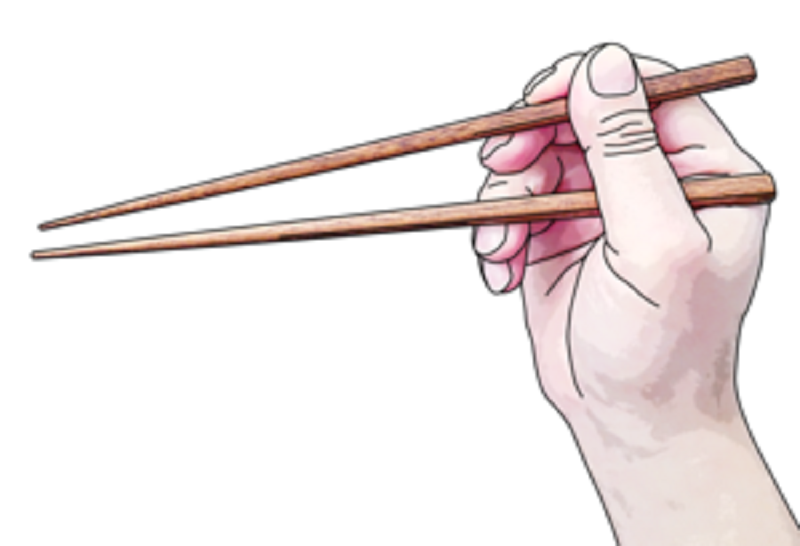
I guess I've always thought a chopstick was just a chopstick, but as the the Chinese, Korean and Japanese ladies show us in the above video there are differences between their shapes and weights. The variations were large enough to make it awkward for them to use the other nationalities' chopsticks.
As an aside I learned how to use chopsticks while I was in the Navy. As a sailor -- well, more accurately as a drunken sailor -- I learned how to use them when was a little, or a lot, tipsy. To this day I'm still clumsy with them when I'm sober.
If you want to learn how to use them, sober or otherwise, the post How to Use Chop Sticks is a good guide.
Also, if you want to be an insufferable bore at a Asian themed dinner party, in Chinese chopsticks are called kuàizi, in Korean they are called jeotgarak, and in Japanese they are hashi. Be sure to mutter about cultural appropriation when you correct people about their proper names.
My YouTube feed recommendations are frequently a look into bizarre corners of the internet. I think it is YouTube's algorithm struggling to make sense out of my search patterns. Anyway, for some reason recently I've been getting all sorts of videos of obviously fraudulent Kung Fu masters getting the snot beat out of them by MMA fighters.
The above video by serpentza gives background on what that's all about. If you watch any of the Kung Fu master's videos they are obviously staged. Why they would then be stupid enough to get in a ring with an actual fighter is a head scratcher. Serpentza explains that it is the outgrowth of Chinese nationalism that can't abide a western fighting style being superior to Chinese martial arts. It's all very strange.
By the way, serpentza's videos about China are pretty good. He is not a fan of the CCP. His YouTube page is worth browsing.
Jalopnik is a YouTuber who makes videos about cars and trucks. He got the idea to buy the cheapest new car he could find. He ended up buying the Changli off of Alibaba. It cost $1200 with the batteries. Above he unboxes it. Then below he takes it for a test drive and shows us some details about the car.
It's really more of a glorified golf cart than a car, but it does have a number of car-like features. I do wonder how long it will be before the thing falls apart.
The Hong Kong situation is revealing fractures in the Sinosphere (Mainland, Hong Kong, Taiwan and the Chinese diaspora) that were previously invisible to us Westerners. This video features a letter written by a mainland Chinese person who discusses the issues facing Chinese living in the West and the isolation the CCP inculcates in many of them. The comments to the video are quite interesting as well.
Today's video is a walk in Suzhou, a city in southeast China. It is rather long, but nicely filmed. It starts out in the backstreets and eventually works its way to a more prosperous district along a scenic river/canal. It is a pleasant looking place, especially along the canal.
The camera work in the video is well done. He frequently pans left or right to look at alleys, side streets, shops and cafes. He'll also stop at intersections and rotate 360 degrees to give you a sense of place.
The above video is from Li ZiQi, an extremely popular Chinese 'Oriental Lifestyle Foodie', making wheat beer and eventually cooking a meal of crayfish and enjoying the beer. Her videos are very beautifully filmed and well edited.
She has a carefully curated image as a young Chinese girl living a simple rural life and demonstrating traditional cooking and crafts. From her About page on her online store:
[Li ZiQi is] a girl who lives in the mountains and forests in the village of northwestern Pingwu, Mianyang City, Sichuan Province, China.
Li Ziqi didn't own happy childhood. When she was a child, her parents got divorced and her father died early. She started living with her grandparents. Their life was poor but affordable. Li Ziqi's grandfather was a cook in the village. When there was a ceremony going on, such as a wedding or a funeral, her grandfather would be in charge.
In her videos, she shows how to cook various dishes, which she had learned from her grandfather. Besides cooking, she also learned how to make bamboo baskets, grow vegetables, and make carpenter handiworks.
----------
Li Ziqi's works convey a positive attitude toward life. Ziqi's videos can help people fulfill the "dreams of the countryside."
These are the dreams of many people at home and abroad, especially Chinese people. Many people show great interest in Li Ziqi clothing. In front of the camera, she always appears in a set of Chinese Han clothing which is made in rough fabric.
Also, her videos help more people learn and understand Chinese traditions and culture. The spirit of struggling for independence and self-reliance conveyed by her life experience has attracted great attention at home and abroad.
Additional information, including biographical information and a brief interview of Li ZiQi, can be found at Li ZiQi - A Modern Chinese Fairy.