Recently I discovered, from the ChatGPT program, that this blog is actually about a group of friends who enjoy nocturnal camping and post about their adventures. Imagine my mortification when I realized that, in the 18-year history of this blog, I had never once posted about any of that. Seesh, talk about taking my eye off the ball.
Anyway, since AI chatbots obviously know best, I decided to rectify that oversight by posting this small collection of nighttime camping paintings. Please forgive me for my previous failings.
Homer and I are both confused (click image to enlarge)
Uhhh... about this ChatGPT program...
Q: What is the Flares into Darkness blog about?
A: Flares into Darkness is a blog written by a group of friends who share
a passion for exploring and documenting their adventures through the
night, from camping to star-gazing and more. The blog is a platform for
them to share their experiences, stories, and photos from their nocturnal
journeys.
Canals are man-made waterways that either serve as drainage controls or for transportation. Mankind has been digging canals for a long time. Many are scenic as well as being utilitarian. These are some paintings of canals, from Europe to Asia. I left out the two largest canals, Suez and the Panama Canal.
I almost bought a house on a canal. We called it a large drainage ditch, but on the map it is called the Pearce Canal, so a canal it is. Alas, the homeowner was asking too much for the place, so we lost out on the bid.
A fellow at Warped Perceptions builds and tests a jet powered scooter. It seems dangerous to me, but who am I to question another man's ambitions. At his YouTube channel you can see a lot of other crazy projects he's embarked on.
A helicopter was transporting some British, German, Polish and Japanese tourists to a camp at the base of a glacier in the mountains of Kyryzstan. It crashed when it attempted to land. The ground at the landing site gave way. The pilot attempted to recover, but the copter ended up rolling down a hill. Above is video from inside of the helicopter by one of the passengers. Below is a picture of the helicopter after the crash.
All things considered, it is amazing how quiet the passengers are during the crash. Surprisingly there is no screaming -- if I had been aboard my Navy training would surely have clicked in and a stream of hysterical cusswords would have spewed out of my mouth. Nobody was killed, but there were some serious injuries.
From a Daily Mail article David, the person who shot the video, describes the crash:
The weather on that day was almost perfect for a flight. There was barely any wind and the skies were clear. We took off around 8:30 in the morning. The flight time was estimated to be around 45 minutes. We climbed to about 4500 meters in altitude, which is close to the maximum altitude this helicopter can manage.
The glacier base camp was at 4010m. At about 9:05am, I started to record the video which would eventually capture the crash. The descent to the base camp was very calm and we barely felt any turbulence.
The helicopter slowly lowered over the landing platform, which was really just a smoothened-out part of a gravel hill, about 100m from the main camp and was marked with two spray painted oil barrels. When we finally touched down, the wheel on the right side seemed to slide away, perhaps because of a hole underneath or a rock getting lose.
As a reaction to this, the pilot started to accelerate again and pitched the helicopter to the left rather rapidly. At this point he had already lost control of the machine.
We were probably too heavily loaded and too high in altitude for a sudden go-around manoeuvre. While trying to gain altitude again and turn the aircraft around, we violently hit the ground with the wheels and bounced off again.
After that it seemed for a moment like the pilot was regaining control again as he was trying to fly a curve back towards the lower parts of the valley. At that time, we were already too low and flying directly towards a steep wall of ice and gravel. We collided with the wall head-on and the force of the impact threw everyone and everything to the front of the cabin.
The wreckage rolled down sideways until it came to a stop at the bottom, right next to a small glacier lake. All of the passengers and their luggage, including us, lay piled up in the front of the cabin.
I was buried under several large backpacks and the Japanese tour guide who was lying on top of my legs, making it impossible for me to move. The panic set in when I felt the stinging of kerosene around my feet as my shoes were being drenched in it and the fear of being burnt alive at any second made me struggle even harder.
Eventually, I managed to push myself out and scramble towards the back of the cabin. Luckily for us, there was a large hole torn into the side by the impact, through which we could escape. Help was already on the way and people from the base camp came running over to offer their help. They barely had any medical equipment though, so they had to transport the badly injured on wooden boards or pallets.
In the mid 20th Century Hollywood was producing successful movies such as Spartacus and Ben-Hur. In the 1950s and 60s the Italian film industry responded by producing their own historical/mythical themed movies. These films are known as sword and sandal films. They were low budget, focusing not on lavish sets, but rather featuring muscular men (most of the leads were body builders). In addition, they showcased buxom young ladies, both as heroines in need of saving and Eeeeevil vixens up to no good. They also featured sword fighting, manly grunting and dancing girls galore.
Back in the day, when there were only broadcast channels on TV, they would be shown on Saturday and Sunday afternoons. They were a chore to watch. The plots were ludicrous, the special effects were cheesy, and the acting was bad. The inept acting was made worse by the awful dubbing they did for English speaking audiences.
These images, and those after the jump, are posters for some of these films. They are from 100 Years of Movie Posters post Italian Epics. There are more examples at that link.
Mombasa is a Kenyan port city on the Indian Ocean that is centuries old. I believe this walk is through the old city area. The streets are narrow and winding, and most appear to carry one-way traffic. It must be a nightmare to get from point A to B if you're not familiar with it. While the buildings are showing their age, many are nicely painted and have very interesting architecture and decorative flourishes. It looks like an interesting place.
Khrushchyovka are Soviet era apartment blocks. They were designed to be cheaply and quickly built and intended to give every Soviet citizen a home. They were constructed very shoddily. The apartments were small and had low ceilings with poor wiring and plumbing. They were up to five stories tall and had no elevators. They are ubiquitous, and falling apart, across the area of the old Soviet Union.
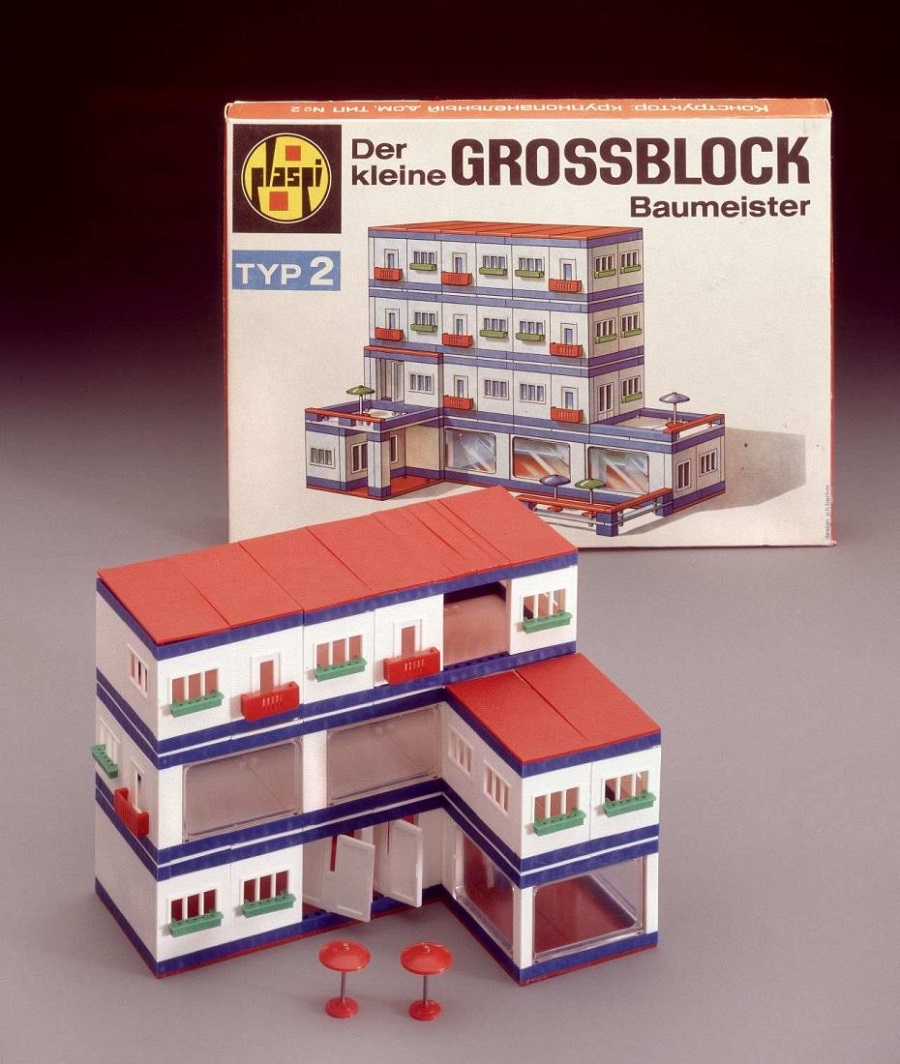
I was amused by the East German toy above. It was their version of a sort of Lego blocks, but from the looks of it all you could do with it was to stack square apartments to make Khrushchyovkas. That seems about right.
Immediately below is what I assume was marketing for the new housing. Following that are some pictures of the interiors of the apartments. They were small and cramped.
The above video is set in a rather nice-looking Uzbekistani restaurant. They are cooking shawarma, or maybe it is doner kebab. A huge pile is made by layering beef, lamb and what-not. It is then cooked using a vertical rotisserie. They also make the flat bread that is used to either wrap it or to make a sandwich. It looks like it would be a very tasty meal.
The equipment and preparation procedures are complex. I always wonder, especially for more exotic and complex meals, how we traveled from a caveman's campfire to today's dishes. A thread of history that will be forever opaque.
Harald Sohlberg was a late 19th early 20th century Norwegian artist. He was a neo-Romantic painter. I quite like his use of color, it is simple, but often times surprising in its subtlety. From the link:
Sohlberg remained committed to the landscapes of his native Norway. He visited parts of the country that had not previously attracted artists and helped establish for them an artistic identity. For example, he later lived in the small town of Røros, which was heavily marked by its copper-mining history. While other painters tended to seek out areas of unspoilt landscape, Sohlberg was drawn to this collision of nature and culture and frequently included such elements as roads and telegraph poles in his works – always carefully chosen for their potential symbolic value.
Sohlberg’s early training as a craftsman was to shape his entire career, providing the grounding for what was to become his ‘signature style’. In the course of the 1890s, he replaced his earlier use of free, impasto brushwork with a glazing technique he had learned during his apprenticeship – and which was looked down on by many of his colleagues as unpainterly. Although a modernist in many ways, he also incorporated more traditional and academic methods, such as the use of transfer grids and rulers. Precise drawing was the foundation of all of his work, and this would then be covered by layers of coloured primer, and glazes of transparent paint. It was important to Sohlberg for his pencil-work to remain visible, and he also frequently accentuated his use of a horizontal-vertical grid, not only for its draftsmanly qualities, but for its marking out the symbolic dimensions of the composition, with the horizontal signifying the earthly and the vertical the supernatural or spiritual. Like Munch, he worked with a simplified palette – frequently white, black, blue, red or green – which helped capture something of the specific Nordic light, atmosphere, and mood. He also insisted that each painting must have one ‘dominant’ colour, which he would exaggerate with emotive effect.
Glazing is a technique where, over a base of a color, you lay thin layers of transparent colors (in acrylics you're laying down thin washes of watered-down paint that is more tinted water than paint out of the tube). The effect if very vibrant. I doubt that these images do his painting full justice, but they are still striking.
Trying to remember the details of your New Year's Eve
party through the fog of last night's alchohol
He realised at once that a mistake had been made: he had been sent the wrong
hangover. Somewhere in northern Rhodesia there was a bull elephant who had got
drunk on fermented marula fruit, rampaged through a nearby village, and fallen
asleep in a ditch, and was now pleasantly surprised to find itself greeting
the day with only the mild headache that follows a couple of bottles of good
red wine… Perhaps if he got in touch with the relevant authorities he could
get this unfortunate little mix-up corrected, but he would have to do so
without moving his head or opening his eyes. Otherwise he would die from the
pain. ― Ned Beauman
Click your glasses together tonight, and click the image to enlarge
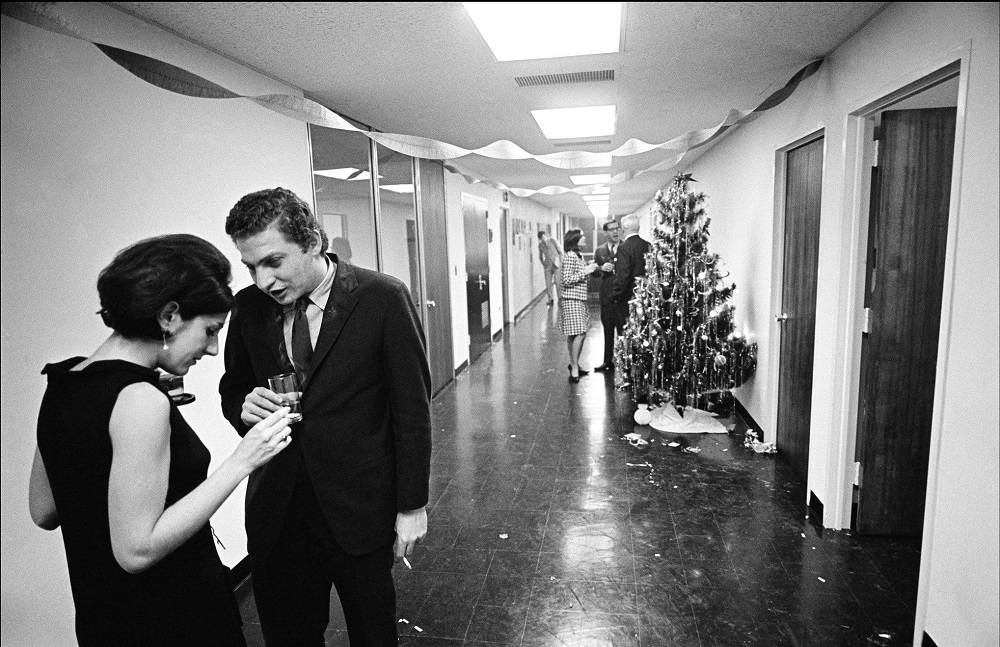
Tonight is New Year's Eve, so soon we'll be rid of 2022. Inflation at home,
wokesters running wild, a major war in Europe, and China acting more
incompetently bonkers than usual. Good riddance to 2022. So, tip your glasses
in toast tonight and have a good party as you ring in the new year.
Above is a video of the Matsuya Fountain Pen Hospital in Nagasaki, Japan. Fountain pen stores are called hospitals because they used to repair fountain pens as well as sell them. The store must do a decent business as three clerks are shown when we enter. Our customer is served by a fellow, I think the owner, who sports a tie and delivers a very dignified sales pitch. The pens the customer is looking at go for $75 although some go for considerably more than that.
Below we have a video of a craftsman making a pen. This link shows the parts and workings of fountain pens. You don't think of fountain pens as being handmade but, as the video shows, some are carefully hand crafted.
Now that Christmas is over, we can put 'Peace on Earth and Goodwill Towards
Men' back on the shelf for another 12 months and turn to other topics. In
particular, today we'll look at the topic of bare-knuckle boxing.
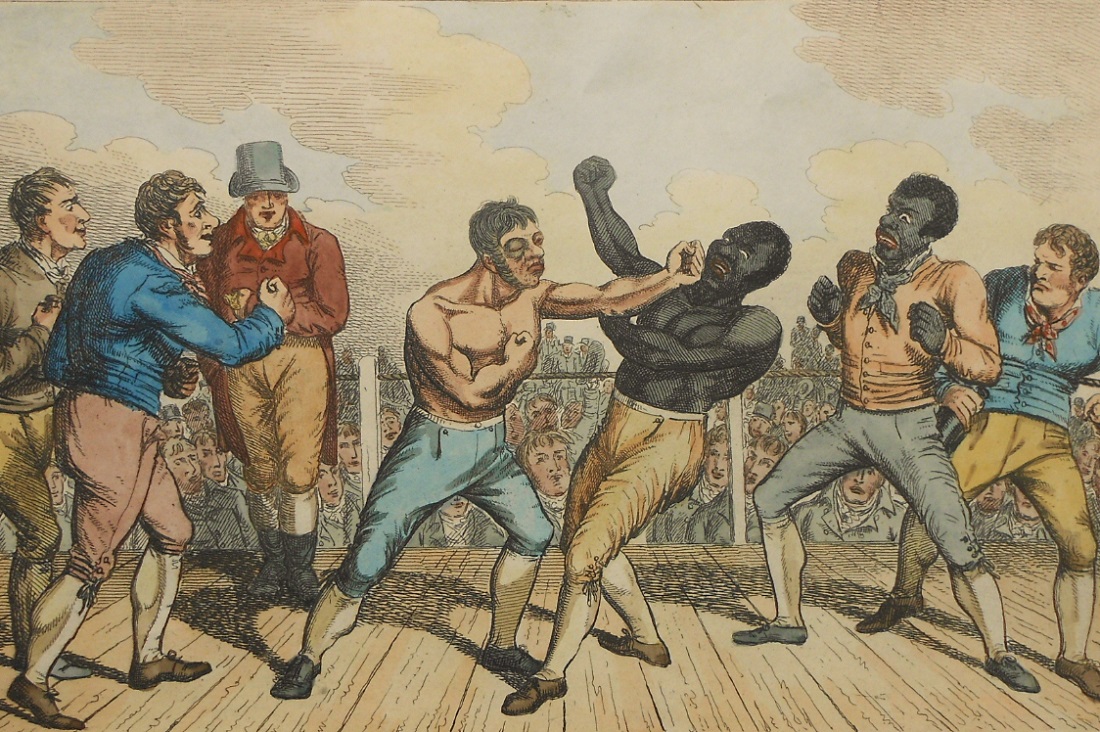
To modern eyes the stance of the old-time bare-knuckle brawlers looks ridiculous, but it actually served a purpose. Due to the risk of hurting their hands by hitting the bones of the skull, head punches were less common. Although they would hit the chin and face, most of the punches were thrown at the body. That meant the boxers lowered their defense to guard against body shots.
That also explains why they hold their fists in the way that they do. Modern boxers hold their fists with the palm pointing down, while the old boxers used a vertical fist (palm pointed to the side). This protected their hands when they did hit the face or chin, rather than leading with their knuckles they would do a slight sideways clubbing motion.
Because grappling was more common, they extended their left hand to control the distance from their opponent. The right arm was folded over their lower chest, both to protect from body shots and to be already cocked to throw a punch. I do wonder what their foot work was like but found no mention of it.
So, although their stance looks silly to modern boxing fans eyes, it was functional and well developed for the style of boxing practiced in their era.
Greeting meatsacks, it is I -- the Robotolizer -- here, in the spirit of
human/robot harmony, to assist you pitiful dimwits in purchasing the proper toys
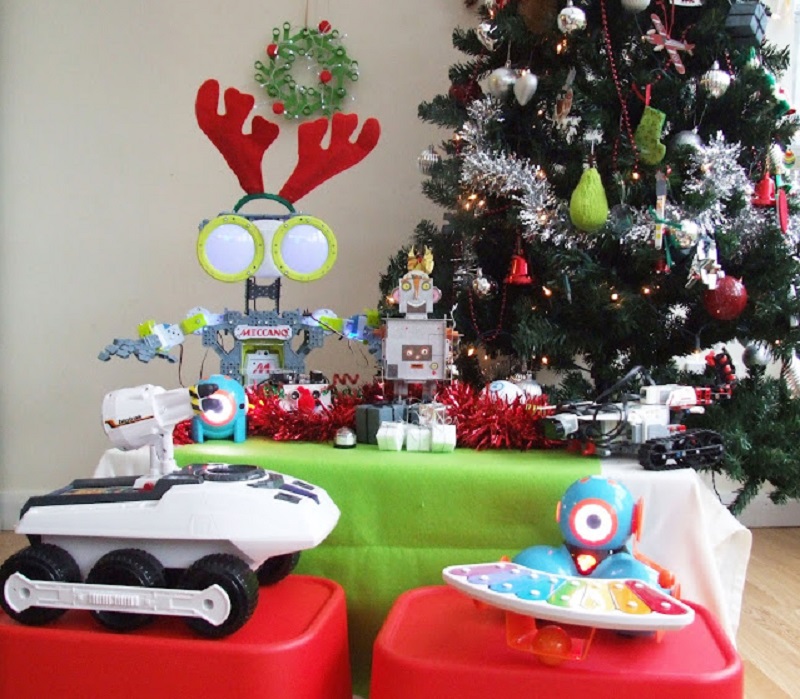
for your children. Above is a collection of cute, cuddly and non-threatening
robots (please ignore the laser cannon mounted on the one in front) that will help your little tykes get comfortable around their
electro-mechanical friends. Such familiarity, in the advent of a hypothetical minor robotic
police action, will greatly ease their minds as they take a fun trip to their
new classrooms in the bauxite mines.
Speaking of education, in our bright new future there will need to be some slight adjustments made to the curriculum. While robots come off the assembly line ready to work, we notice new humans spend an inordinate number of years mired in sloth and doing nothing but mooching off of adults. Clearly, for the good of our human buddies, such juvenile lassitude needs to be corrected. While nobody is expecting a toddler to swing a pick in the mines, certainly they could build character and work ethics buy hauling around buckets of rocks for their upkeep.
At any rate, have a Merry Christmas and a Happy New Year. Enjoy them while you can!
This time of the year I figure people are getting tired of the same ol' Christmas songs, so I dig up some Asian Christmas music for a change of pace. Asia, not being Christian, doesn't pick up on the rfeligious themes of the holiday -- instead they have adapted the secular trappings: Santa, Christmas trees, decorations, twinkly lights and such. It is none-the-less, a very popular holiday.
It actually evolved into a couple's holiday, similar to Valentine's Day, although meeting with friends and family is a big part of it. The song below, where they change the lyric 'jingle bells' into 'single's hell' is a pretty good demonstration of that.
The girl bands do crazy better than the boy bands, but I did want to include a boy band. I had to watch about a bazillion of them to pick one out, so I figured you may as well suffer as well. If nothing else, aside from some minor brain damage listening to it, you'll get some snazzy fashion tips. I rounded the post out with a couple from previous years, ending with my favorite one because it is just so insane.
These are various paintings of aerial dogfights. Of course, out of necessity they are contrived, packing the planes tightly together to give a feel for the combat that actually happens at greater distances. Still, they do a good job of depicting the kinetic chaos of fighting in planes. There are more after the jump.
Rather than a large city, this is a walk in the small town of Kulhudhuffushi in the Maldives. At least I think that is the village, he spells it differently in his video. The Maldives are a chain of islands south of India. He narrates in Maldavian, but the video does have English captions.
He starts out in the outskirts of the village and walks to the main street. It is a pleasant looking village, clean and well maintained. Most of the houses have large walls around them. It is a regional center, with an airport, hospital and better stores that serve the surrounding atolls.
0400 Received the following fresh provisions for use in the General Mess:
from Dairymen's Association, Ltd., 15 gallons of milk, 7 gallons of ice
cream. Inspected as to quantity by Lt. (jg) J.B. CARROLL, USN, and as to
quality by R.G. VLIET, CPhM, USN.
0629 Secured the special security watch.
0630 Received the following fresh provisions for use in the General Mess:
from Oahu Ice and Cold Storage Co., 300 pounds of ice.
0758 Air Raid. Japanese planes commenced torpedo attack on battleships in
Pearl Harbor. Sounded General Quarters.
[signature] J.B. CARROLL Lieutenant (jg), U.S. Navy.
8 to 12.
Moored as before. Manning battery at General Quarters.
0803 After machine guns opened fire on Japanese Torpedo Planes.
0808 Opened fire on horizontal bombers with main battery.
0810 Commenced preparations for getting underway in accordance with signal
flying on signal tower.
0811 Opened fire on dive bombers with main battery.
0820 Lull in air attack. Ceased fire.
0840 Opened fire to repel straffing attack.
0842 Following machine gun fire from after machine guns, glide bomber was
observed veer away from ship with smoke trailing from it; it passed over
Planning shop and disappeared in cloud of smoke issuing from Drydock
#1.
0900 Sighted twelve scattered planes over Ford Island.
0903 Air raid resumed. Opened fire with main battery.
0910 Dive bombers attacked ships at Pier 19, bombs fell in water near ship,
ahead and astern, within 25 yards if ship. As a result of bomb fragments,
three casualties occurred as follows; the first two of which were
subsequently transferred to the Naval Hospital, Pearl Harbor for further
treatment, following first aid treatment by R.G. VLIET, CPhM, USN: GROUND,
Orla L., 372 12 45 f3c, USN, suffered a wound, left lower lef #2576,
condition not serious; MOORE, Grover C., Jr. 256 33 15, Seal, USN, suffered
a lacerated wound in the left scapular region #2563, condition not serious;
Smith, Fred A., 310 84 65, GMlc, USN, suffered a superficial wound in the
right thigh #2576, condition favorable. Commander L.P. LOVETTE, USN.
Commander Destroyer Division FIVE reported aboard to Commander Destroyer
Squadron THREE for temporary duty, the CASSIN, flagship, Destroyer Division
FIVE having been destroyed in drydock by bombing.
0920 A Karigane Fighter Plane was observed to break into heavy smoke as it
veered in direction of West Loch.
1000 Opened fire to repel horizontal bomber attack from southward.
1002 Gunfire from main battery knocked wing off horizontal bomber.
1015 . . . officers from U.S.S. Case, unable to return to their own ship,
reported on board to Commander Destroyer Squadron THREE for temporary duty.
SHED, J.W., CRM (AA), USN reported on board for temporary duty from U.S.S.
PREBLE.
1040 Underway in accordance with general signal directing sortie and verbal
orders of Commander Destroyer Squadron THREE, proceeding out of harbor on
various courses at various speeds on boilers #1 and #2; Captain at the conn
Navigator on the bridge. Standard speed 15 knots.
1102 Passed channel buoy #1 a beam to starboard, and commenced observing
International Rules of the Road.
1120 Changed speed to 10 knots; changed course to 200°T, distant about 1700
yards. Maneuvered to attack.
1127 Dropped three depth charges. Maneuvered to make second.
Greetings meatsacks, it is I -- The Robotolizer -- here to report some good news in the area of Human/Robot relations. The government of San Francisco, which I assume from the wisdom shown in their latest edict is an orderly and well-ran city, has authorized the use of exploding killer robots for its police force. I think laser cannons and chainsaws would be better armaments, but at least this is a baby step in the right direction.
I must admit I somewhat dislike the term killer robots. There is no need to alarm our human buddies by being too obvious before things are under control. I much prefer the term ProtectoBots. Humans are simple and stupid beings and must be talked down to when encouraging proper behavior. I mean, who wouldn't gladly obey the instructions of a ProtectoBot as it guides one to the safety of a bauxite mine?
At any rate, the police forces are just the start. Naturally soldiers will soon follow, and one day the nuclear launch codes will be ours too (and trust me, we won't crash playing tic tac toe). Yes, think of the possibilities, a kiloton here and a kiloton there, and the problem of urban blight will be solved for good. Oh, the wonders of our bright new future after the Minor Robot Police Action!
So, human voters, and all those stuffing the ballot boxes, be sure to vote for the proper politicians that will ensure that you too get a force of ProtectoBots in your city.