Spend the weekend looking over your shoulder with Stares.
Friday, December 13, 2019


Wednesday, December 11, 2019
Climbing Perch Fish Curry
A Bengali couple cooks a meal of Climbing Perch Fish Curry. It is a simple meal. They start by catching the fish in the mud of a rice paddy, then go through an elaborate process of washing and cleaning the fish. They chop the spices and also grind some of them using a brick and what looks like a piece of tile. After they cook the fish over their fire they eat the meal using their hands to scoop up the rice and perch.
Sunday, December 08, 2019
An old-timey carwash
 |
| Click any image to enlarge |
They lasted from 1921 to the early 1930s when they were replaced by more modern automatic car washes. From the Vintage Everyday article The Auto Wash Bowl in Chicago, ca. 1920s which has more pictures and information about them.

Saturday, December 07, 2019
The Day of Infamy
 |
| Click image to enlarge |
On the morning of December 7, 1941, I had relieved the watch in the port engine room [of the USS Utah]. I had been on watch about 20 minutes when the first torpedo hit the ship on the port side. It was about 5 or 8 minutes before I could hear someone hollering that the Japanese were attacking us.
I ran up the ladder to the third deck. On the port side was our sleeping quarters, and water was already washing over my bunk. I went to the starboard side of the ship, went up to the second deck to our locker room and mess hall. There were several other men there. One asked if he should take his dress blue uniform with him. I told him he wouldn't be needing that for a good while.
I grabbed an extra pair of dungarees, a carton of cigarettes, and went on top side. A friend and I sat down on the side of the ship and slid into the water. We swam to Ford Island where we were picked up by a party. They took us to the USS California to unload ammunition. That evening we were taken to an ammunition ship that was tied up at the docks in the shipyard. We spend the night there. - Cecil Camp (source)
Friday, December 06, 2019
Thursday, December 05, 2019
Greyhound Bus ads
 |
| Click any image to enlarge |
In his Civil War: a Narrative Shelby Foote talked about the long campaigns meant that the primarily rural soldiers traveled far and developed a different sense of the nation. Similarly, in WWII many of the young men had traveled to Europe, Africa or Asia. In the years after, and before the wide spread of the car culture or cheap airfare, these young men and their families wanted to see distant places in the States. Greyhound buses provided them with a means to travel long distances.
These ads, and those after the jump, are from the Ad Access section of Duke University's digital repository.


Monday, December 02, 2019
Revenge and forgetfulness
 |
| Click image to enlarge |
To be wronged is nothing, unless you continue to remember it. ― Confucius
Friday, November 29, 2019
Black Friday stampede
Because it follows the Thanksgiving holiday this Friday isn't really the start of a weekend, so I will forgo my usual Friday video and instead, in honor of Black Friday shopping madness, I'll post a stampede video.
Not sure what would be more intimidating, those elephants or Walmart shoppers at the moment the doors open for the Black Friday sales.
Thursday, November 28, 2019
Happy Thanksgiving
 |
| The Peasant Meal by the Le Nain Brothers |
If a fellow isn't thankful for what he's got, he isn't likely to be thankful for what he's going to get. - Frank A. Clark
Tuesday, November 26, 2019
Vodou flags
 |
Images from Indigo Arts Gallery
(click any image to enlarge)
|
Vodou flags are a mixture of French battle flags with West African bead work. They feature beads and sequins. Originally they were religious in intent, although with the growth of tourism to Haiti they have also adopted a more secular and commercial purpose. From Haitianna's article Vodou Flags - An Essay on Collecting:
As Vodou flags made their way out of temples and into Port-au-Prince galleries and the hands of foreign buyers, curiosity about their purpose and function grew along with the numbers of people making flags. Some artists like Georges Valris imbue their flags with Christian imagery such as angels. Valris , who denies any belief in voodoo, regards flag-making as a commercial enterprise. Other flag makers, including Jean Baptiste Jean Joseph, are diehard voodooists. He once told me a story about seeing the mermaid figure of La Sirene, who controls the fate of anyone dealing with the ocean, actually walking out of the sea. But Joseph is also practical, using the flag medium in documentary fashion to portray what he sees around him including cats and lizards. This broad range of pictorial representation makes him a welcome anomaly among the current crop of voodoo flag makers, a group whose numbers seem to be swelling in recent years. With his innate color sense and use of luxurious materials such as velvet and satin, Joseph is setting a high standard for the next generation of flag makers to follow.These examples, and those after the jump, are from Indigo Arts Gallery's catalog of Haitian Vodou Flags. They sell the flags (as well as artwork from other regions) if you're interested in purchasing one.
Each flag maker is known for something special. For Yves Telemaque, it’s the fantastic and optically challenging borders of his flags. By surrounding the central image in triangles and circles, then using faux pearls to accentuate contrasting colors, Telemaque rivals the paintings of Jasper Johns. Then there are traditionalists like Clotaire Bazile, who adheres to voodoo heritage in his portrayal of gods and goddesses and their symbolism. His simple diamond borders recall the careful workmanship on American patchwork quilts. Even newcomers to the field are distinguishing themselves. Lerisson Dubreus uses the trapunto technique of his forebears who made flags half a century and more ago.


Saturday, November 23, 2019
A small and complex machine
A nicely filmed video that shows the design and fabrication of a Patek Philippe wristwatch. The effort and care put into machining, finishing and then assembling the tiny parts of the watch's mechanism is amazing.
In an earlier post The evolution of complexity in watches I did reflect upon how deceptive the apparent complexity of watches could be:
Indeed, just like extremely large scales escape us, our perception is far too crude to make real sense of something so small. In the end we only see a slice of reality.Above are three main types of time pieces: ... a cheap crystal watch, ... a mechanical watch's mechanism, ... a digital alarm clock.
Of the three the mechanical watch visually seems to be the most complex, but there is little doubt that the digital clock is actually more complex by orders of magnitude. While the switches, LEDs, capacitors and resistors are simple enough, hidden within the IC chip, and discernible only by microscope, are circuits of immense complexity.
Friday, November 22, 2019
Wednesday, November 20, 2019
Babylonian stew
This video is about three stews that were made from ancient Babylonian tablets that contained the oldest known historical food recipes. From The History Blog's article Babylonian stew which is about the Yale project that recreated these dishes:
The Yale-Harvard team prepared three recipes which were all from one tablet [cuneiform tablets in the Yale Babylonian Collection]: two lamb stews — one with beets and one with milk and cakes of grain — and a vegetarian recipe enriched with beer bread.
The variety of ingredients, complex preparation, and cooking staff required to create these meals suggest that they were intended for the royal palace or temple — the haute cuisine of Mesopotamia, says Lassen. Few cooks were able to read cuneiform script, she adds, hence the recipes were most likely recorded to document the current practices of culinary art.
...
“Making a stew is a very basic human thing and I think that is one of the reasons that we really went into this project,” says Lassen. “There is something really human about eating and food and tasting things, and that’s what we wanted to explore by recreating these recipes. Maybe not entirely as they as they would have prepared it — maybe our ingredients taste a little bit different — but still approximating something that nobody has tasted for almost 4,000 years.”
Monday, November 18, 2019
Beadle's New Dime Novels
 |
| Click any image to enlarge |
They are from the Nickels and Dimes website. There are more pictures after the jump as well as many more at the link. Also, if you follow the link the full magazines are archived, so you can read the stories in them.


Sunday, November 17, 2019
Conversations with North Korean defectors
This video features interviews with three North Korean defectors who have adjusted to life outside of that country. In the first part they recount their experiences growing up in North Korea, in the second their impressions of the wider world after their defections (two of them even spent time in the States).
Their comments about Trump are interesting. Prior to him they considered Korean diplomacy to be in a sort of equilibrium, with the Kim's saber rattling to get aid. The three obviously considered Trump to be dangerously unpredictable and seemed never to understand that it is a negotiating tactic to reshuffle the diplomatic deck and limit North Korea's options in the process.
The quote that did jump out at me was when one of them discussed their impression of the U.S., "Real freedom means respecting others' freedom as much as you value your own". Sadly, not so much these days.
Friday, November 15, 2019
Roadhouse Blues
Get ready for an early morning beer this weekend
with Daryl Hall, Robby Krieger, Ray Manzarek and others.
Wednesday, November 13, 2019
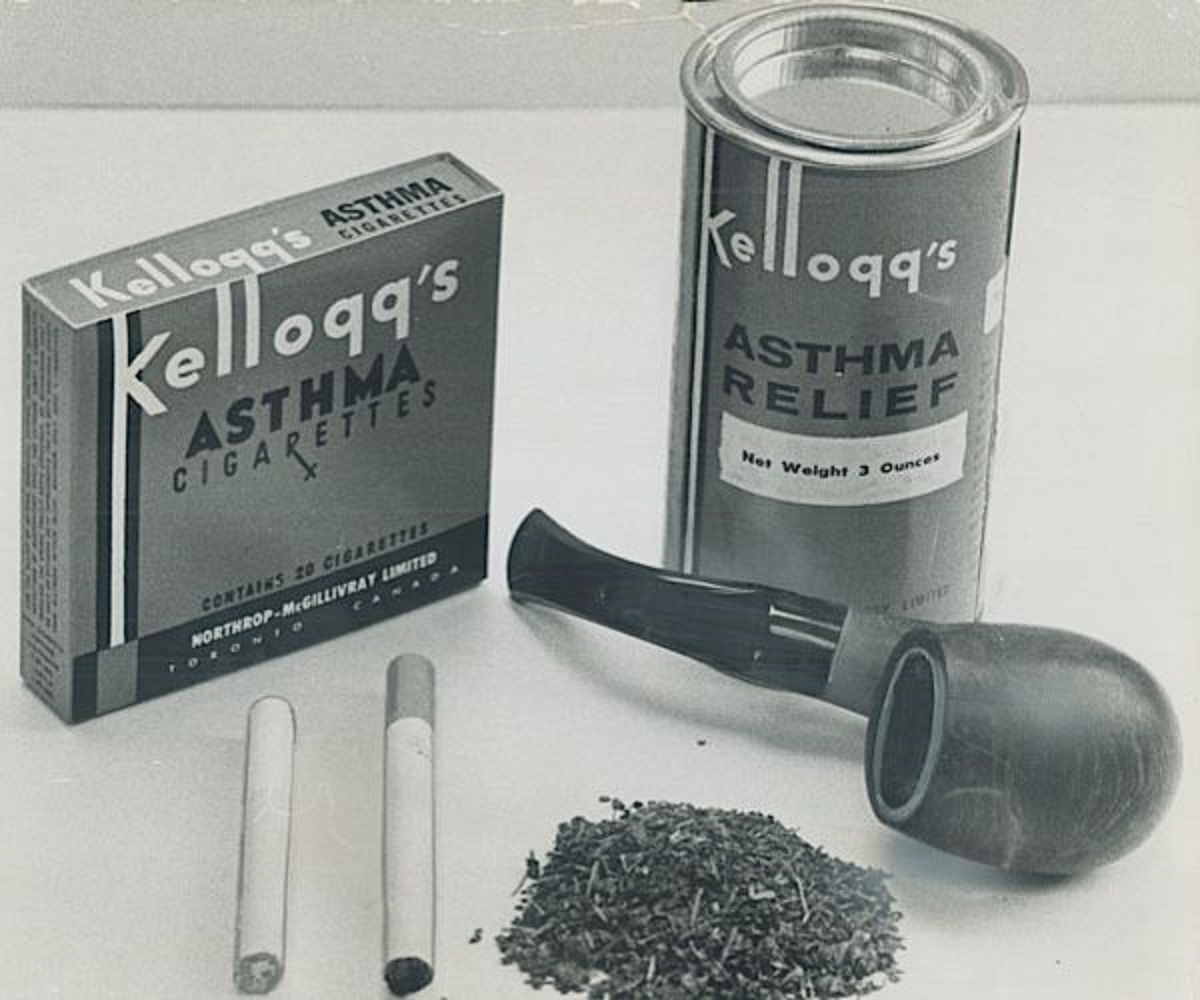
Smoking to relieve asthma
 |
| Click any image to enlarge |
These samples are from the Messy Nessy post A Brief Compendium of Medical Quackery. There is much more quackery at the link.


Tuesday, November 12, 2019
Returning to Earth from the ISS
An interesting video on how the Soyuz capsule is used to return crew from the International Space Station. The actual touchdown of it looks pretty brutal.
Monday, November 11, 2019
Veterans Day
 |
| Moving forward to relieve the front line troops in the trenches |
We moved to the right, I remember, got into a church yard – a cemetery – and then dropped down into a trench. And I couldn’t believe it; I was knee deep in mud for a start. I’d never been told about the Somme and the mud on the Somme, it was all new to me. Well we sloshed down this communication trench and we passed a support line and then we went further up and got to what was the front line. And then that was the first we knew about trench warfare – we were told we hadn’t to show our heads above the parapet because there were snipers and they would get us if we did, you see, so we had to be careful. It was a bit of a shock because I could hear shells exploding and rifles and machine guns going, and I thought, ‘Well, I shan’t be here above five minutes.’ It depressed you a bit; just I’d not been warned about it, you see, I’d no idea what it was like. (source)
Sunday, November 10, 2019
Japanese craftmanship
These videos are from the YouTube channel Aoyama Square. They show various example of traditional craftmanship and are very nicely filmed. Above is a woodworker making tubs and barrels. Below are examples of copper casting, wood carving and textile dyeing. There are a lot more videos at the link.
Subscribe to:
Posts (Atom)