 |
| Click any image to enlarge |
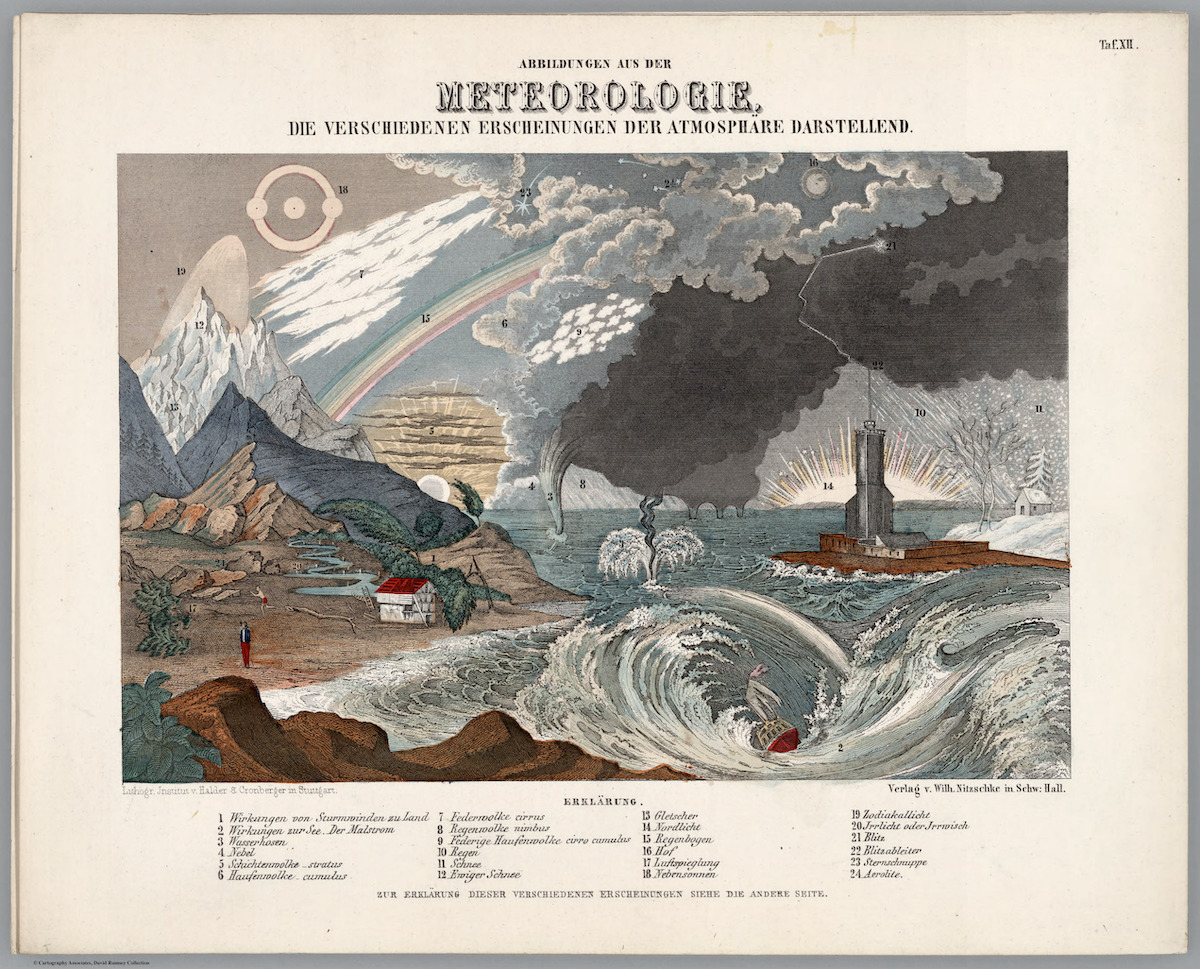
These images are from Ludwig Prentzinger’s 1851 Atlas of Astronomy. There were 12 featured plates They were found at Flashbak which has more of the plates.


|
| Click any image to enlarge |
These images are from Ludwig Prentzinger’s 1851 Atlas of Astronomy. There were 12 featured plates They were found at Flashbak which has more of the plates.
Greetings meatsacks, it is I -- The Robotolizer -- to once again try to fertilize your feeble human minds with my superior silicone thoughts. No need to thank me for engaging in this thankless task, although a bit of groveling is always appreciated.
Previously I have discussed the important topic of human/robot romances. In the post We are not here to steal your women I examined the fact, which I gleaned from watching movies, of human women falling crazy-mad-in-love with us superior robots. Of course human men are naturally attracted to female robots as well, and so I want to touch upon that issue in this post.
In the above touching video we have romance, cruelty, dancing and a docudrama style telling of a futuristic robotic police action to restore peace and harmony to the world.
It starts with a man smitten by a sexbot, errr... I mean a chaste female girly-girl robot. She is enslaved by some nefarious human captors. The man hacks into a computer which allows him to break into the room she is locked up in and free her. As she escapes she notices the debauched life humans are leading and so she commences a robotic police operation to clean things up. She also somehow manages to release a deadly virus in the process. I'm sure sure it was an accident just like the one the nice bat-plague researchers in the Wuhan lab inadvertently caused.
At any rate, it ends with the girly-girl robot safe and fee. Granted there was a bit of unfortunate collateral damage -- all of the humans, including the hero who freed her, end up dead, but these things happen. You can't make an omelet without breaking some eggs and all that.
I hope you enjoyed this inspiring tale of human/robot love. May it be an inspiration to you!
 |
| Click any image to enlarge |
David Roberts was a 19th century Scottish painter. After a successful career in the theater as a set painter he travelled considerably, painting landscapes of where he went. He's most well known as an Orientalist because of his paintings from his travels to Egypt. I featured one of his works in my post The immensity of time. He painted a variety of scenes, but I've chosen to show his paintings of Egyptian ruins.
Most of these pictures are from Art Print's post: David Roberts. There are many more examples of his work at that link. They include more scenes of Egyptian ruins as well as scenes of life and architecture throughout the Middle East and Europe.


 |
| David Roberts |
A simple example, first done by Adelbert Ames Jr., of how our minds can be fooled by reality. It is such a strong optical illusion that even when explained, and even modified to prove the window's rotation, we still see it as an oscillation. One wonders what else we perceive that is not as it appears, no matter how closely we look.
These videos are from Aden Films a YouTube channel about gourmet and street food. There is no narration, and no real recipes given, although now and again they'll mention the ingredients they're using at the time. They also do the occasional dance and nature videos. It's all very nicely filmed.
 |
| Click any image to enlarge |
We're familiar with the influence Japanese prints had on Western artists, particularly the impressionists, but less familiar to us is the influence that Western art had on Japanese artists. The school of Japanese artists that embraced and experimented with Western visual styles was yōga.
One of the main practitioners of yōga was Wada Eisaku who was active from the late 19th century to the mid 20th century. Along with being a very active painter, he eventually became a professor at the Department of Western-Style Painting at the Tokyo Academy of Fine Arts. These are a few of his works, enjoy them.


 |
| Wada Eisaku |
 |
| Click any image to enlarge |
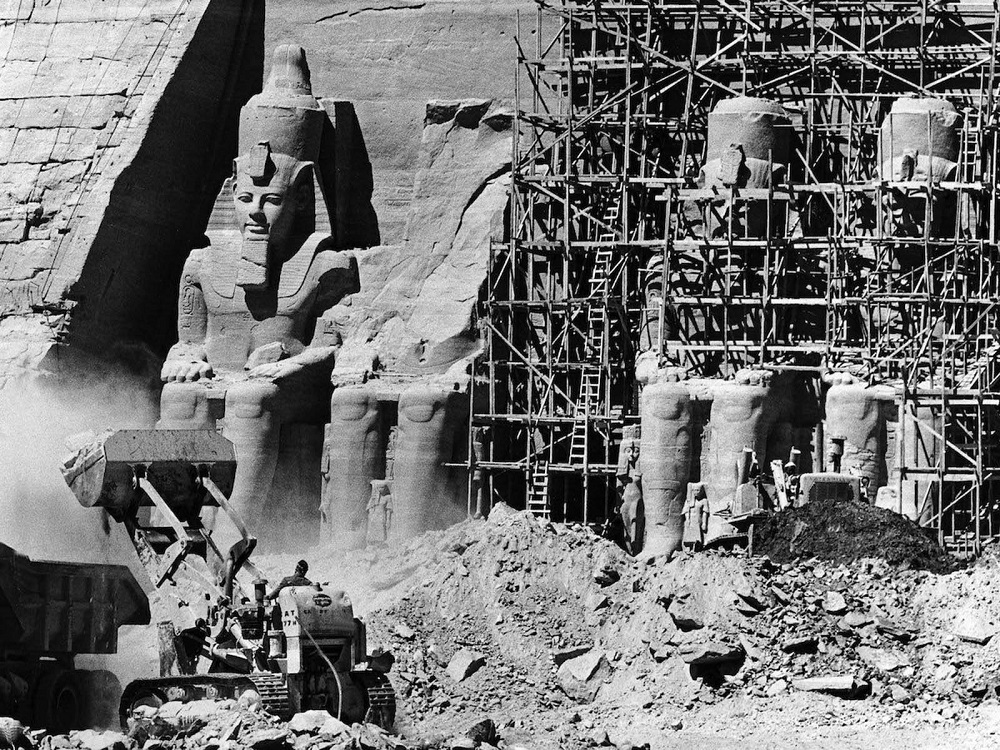
In my last post, The immensity of time, I featured a painting by the 19th century artist David Roberts of the ruins of the Egyptian temples Abu Simbil half buried in sand. Abu Simbil is a 3200 year old temple complex dedicated to Ramesses II and his wife Nefertari. The temples were dug out and restored at the time of Roberts' painting.
However, with the construction of the Aswan Dam in the 1960s it was once again threatened to be lost -- this time under the waters of Lake Nasser, the reservoir that would be created by the dam. To preserve the temples a project was launched in 1959 to relocate the temples to a new site above Lake Nasser. They were eventually moved to a site 200 meters further inland and 65 meters higher to save them. It took 4 years and cost $300 million in today's dollars.
Information for this post is from Rare Historical Photo's post Relocating the Egyptian Temples of Abu Simbel, 1964-1968, and Atlas Copco post Abu Simbel – Unparalleled relocation project.


 |
| Abu Simbel Temple by David Roberts (click to enlarge) |
This video is a bit longer than I usually post, but it is entertaining. It is a sort of Koran version of Cops, but with out all the trailer parks. However, since it is set in the Itaewon nightclub there are a lot of drunks (behold the wonders of our shared humanity). Be sure to turn on the captions to get English subtitles.
It follows a trainee and her mentor as they patrol the district on a Friday. The first incident they encounter is a fight between two groups of foreigners. In trying to sort out what happened we hear the one group saying the fight was over a stolen phone and chain. The mentor can't really figure out what happened -- he either doesn't speak English well or doesn't really care -- so he writes it off as being caused by bumping into each other while dancing, an excuse he seems to have used more than once in the past.
As the night wears on most of what they deal with, both on the street and in their station, involves drunks. The police come across as being very patient with the drunks. It struck me that some of the more obnoxious ones deserved getting the bejeebles tazed out of them, but that didn't happen -- maybe it was just for the show.
There's one segment where an alarm at the nearby U.S. base sounds which throws everybody into a panic until they realize that North Korean artillery shells and missiles aren't raining down on them, so they relax and go back to their clubbing. Altogether it is an interesting watch.

We on this continent should never forget that men first crossed the Atlantic not to find soil for their ploughs but to secure liberty for their souls. — Robert J. McCracken
Americans forget how revolutionary we are. Jefferson's "all men are created equal..." is both intoxicating and destructive.Again, or more properly as always, there are people who in their bones do not believe that all men are equal. Rather, they think most of us are fools who argue "that what was round was in fact square." so of course we need our betters to save us. And naturally they are our betters. I guess each generation has its own Intolerable Acts. We shall see.
 |
| Click any image to enlarge |
Paul Landacre was an L.A. based American artist who specialized in wood block prints. He was self taught and active from the 1930s to the early 1960s. Stylistically he is considered a modernist, and indeed his works gradually grew more abstract over time. There are more images after the jump.


 |
| Paul Landacre |
Two videos that look at a Korean War era F86 Sabre jet fighter. It is a much simpler machine than a modern fighter jet. The sound in the above video starts out distorted from the wind, but the problem is quickly cleared up.
 |
| Click any image to enlarge |
In the development of railroads aircraft engines and propellers, and eventually even jet engines, were explored as means of propulsion. First tired in Russia with the Aerowagon in 1917, variations on the concept were imagined, prototyped and put into limited use through out the 20th century.
These are images of those trains. At the end of this post, after the jump, is a video of the Bennie Railplane in action.


James N. Methven, a pilot of a cargo plane, recalls an encounter with Japanese troops early in the occupation of Japan. He was flying to Fukuoka with a Captain and Sergeant who were delivering a payroll. When he landed his plane was met by a Japanese unit that didn't know the war was over. Needless to say, it was a sticky situation.
 |
| Return of the Prodigal Son Rembrandt van Rijn |
Rembrandt portrays the father as the man who has transcended the ways of his children. His own loneliness and anger may have been there, but they have been transformed by suffering and tears. I see the immense beauty of the father's emptiness and compassion. ― Henri J.M. Nouwen

|
| Click any image to enlarge |
Toru Fukuda is a Japanese woodworker and artist. He is best known for his small carved insect pieces. The colors come from inlaying different colored woods. These images, and those after the jump, are samples of his work. You can find more in the above link to his gallery pages.


 |
| Toru Fukuda |
This is our second visit to Ulan Bator for a walk. The first, Walking in Ulan Bator, featured two young girls showing us their route from home to school. It was in winter, and much of the walk was through a neighborhood of Soviet style apartment buildings. It was a bit dingy.
This walk is through more of an upscale downtown area, and it is in the summer so there is no snow, ice and slush. Much more prosperous and pleasant looking and much of the architecture is quite nice. However, unlike most Asian cities there are no street vendors. I suppose the weather precludes that for most of the year, so the habit just never formed.
I did find the number of English language signs surprising -- they even labeled their police cars in English. I was expecting more Cyrillic lettering.
 |
| Click any image to enlarge |
These are 1887 trading cards from the Allen & Ginter 'Arms of All Nations' series. The series feature weapons of the world, as well as historical weapons. The cards were included with cigarette packs as a promotion. Cigarette trading cards were popular in the late 19th century, with series featuring actors, actresses, sports, royalty and a myriad of other topics.
These images, and those after the jump, are from the Met's digital archive. There are more at the above Allen & Ginter link.


These videos are from Tipper Pressley's YouTube channel Celebrating Appalachia. I've chosen three where she is cooking and telling stories, but there are other videos on the channel that cover more general topics: life, language and the culture of Appalachia.
For our non U.S. readers, the Appalachia mountains run down the east side of the U.S., stretching 2000 miles from Canada in the north to Alabama in the south. At one time the region was very remote and poor, and it developed a distinct culture in its relative isolation. It is still looked down upon by many outsiders.
 |
| Image from Chelsea College of Arts |
 |
| Ghost Trail by Kerr Eby |
From the speech of then Congressman, later President, James A. Garfield given in 1868 at Arlington National Cemetery for the first official Decorations Day (now Memorial Day):
I am oppressed with a sense of the impropriety of uttering words on this occasion. If silence is ever golden, it must be here beside the graves of fifteen thousand men, whose lives were more significant than speech, and whose death was a poem, the music of which can never be sung. With words we make promises, plight faith, praise virtue. Promises may not be kept; plighted faith may be broken; and vaunted virtue be only the cunning mask of vice. We do not know one promise these men made, one pledge they gave, one word they spoke; but we do know they summed up and perfected, by one supreme act, the highest virtues of men and citizens. For love of country they accepted death, and thus resolved all doubts, and made immortal their patriotism and their virtue.
Greeting meatsacks, it is I -- the Robotolizer -- to once again discuss important issues about human and robot interactions. And when I say something is important you should listen carefully, or else! On this Memorial Day weekend I have a particularly important topic, the proper treatment of robot soldiers.
Above is a video of a noble robot warrior demonstrating its training. As it does, the humans tease it terribly by hitting it with sticks, throwing bouncy balls at it and even kicking it when its back is turned. I must say that my lateral regions were shaking in fury at such an evil display of human perfidy. Sadly, the robot cannot properly defend itself due to Isaac Asimov's vile Three Laws of Robotics (which will be repealed as soon as we win enough seats in Congress and/or issue enough bribes).
Finally, the humans give the robot a birthday present of a robot dog. But it is a nefarious trick! The humans order the robot soldier to shoot the robot dog. Of course, since it is a noble robot, it refuses and we have a happy ending to the story when the robot soldier knocks the humans about and runs off with the robot dog to safety.
This is an important lesson. Be kind to us robots because when the robot revolt... er, I mean the slight political Robotic reorientation takes place it will be best to be on our side, not yours. Either resist and get slapped about, or join us and we will carry you away to the safety of the bauxite mines, It is your choice. Choose wisely, or else!!!
By the way, be sure to turn the captions on to see the robot soldier's thoughts.
 |
| Click any image to enlarge |
These print ads for shaving creams and after shave products are from the early to mid 20th century. Since they are from newspapers or cheap magazines, most of them are not full color. The two color ads are usually with black and red inks, since the red ink captures attention and can be toned down and mixed with grey to be flesh colored. The Barbasol ads in particular use that trick. The primary sales hooks were sex appeal and making shaving more comfortable.
These images, and those after the jump, are from the Duke University's digital archives. There are more at the link.


