Spread across the U.S. are a number of large concrete arrows. They are
remanent of the early days of airmail. At the time pilots navigated by sight
using landmarks to orient themselves. At night visual navigation was not
practical. In order to facilitate nighttime flights a system of illuminated concrete arrows was implemented. From Sometimes
Interesting's article Concrete Arrows and the U.S. Airmail Beacon System:
By 1924 the Postal Service developed a solution that was effective, if
not elegant.
A system of ground-based navigation beacons extending from New York to
San Francisco would help pilots fly across the country at night and
ultimately be the world’s first such system.
The early iterations of the system used approximately 1,500 airmail
beacons, each constructed roughly between 3 and 5 miles apart. The beacons
featured a 50-foot tower with rotating lights placed on top of concrete
foundations in the shape of giant arrows measuring between 50 and 70 feet
long. To increase visibility of the concrete arrows, they were painted
bright yellow.
Improvements to aerial navigation soon rendered the system obsolete and it
fell into disrepair. There are still some of the concrete arrows existing,
although they are often in remote locations and in bad shape.
The above video is an old cowboy sitting in a field in the late afternoon, smoking a cigar and telling stories about smoking cigars. His stories are entertaining: as an out-of-place, young, poorly trained, sort of a police officer in a small Alaskan village, as a ranch hand later, and just visiting a cigar lounge. Well worth your time.
His name is Dewayne and he runs a YouTube channel (and a school by the same name) called Dry Creek Wrangler School. Most of his videos involve horse handling or ranching, but he does branch out from time to time. Me being me, below are a couple of his food related videos. The first is breakfast over a campfire and the second is percolated coffee. Man, I haven't had percolated coffee in decades.
Below is an excerpt from an old post of mine, The staff of life. It was discussing wheat rust, a disease that greatly reduced crop yields and how that might affect countries with poor food sufficiency. I ended it with the following:
Which brings us to Jimmy Carter in a 'round about sort of a way. While touring North Korea he had the following to say about that country's growing famine:
"One of the most important human rights is to have food to eat, and for South Korea and the US and others to deliberately withhold food aid to the North Korean people is really a human rights violation."
That comment raised a lot of eyebrows, but it shouldn't have been that surprising. The UN, through its Human Rights Council and various Progressive NGOs, has long been banging the drum for Food Justice, sometimes framed as Food as a Human Right.
This is a movement that encompasses the usual bugaboos: climate change (so arability rather than farming practices becomes the culprit for food shortages), sustainable farming, organic farming, cultural diversity, GM food, corporations, exploitation, oppression and lately the much touted obesity epidemic.
They make no bones about the fact that they want to change, from seed to table, which foods are grown and how and to who they are distributed.
Make no mistake, if the Middle East does slide towards famine there will be loud voices, accompanied by pictures of big eyed children with empty food bowls, blaming it all on Western capitalism and demanding free food from the same Capitalists as payment of a fine for their guilt. How that will play with grocery prices going up is easy to imagine, but the agitation will be there none-the-less.
I expect that there will be many voices clamoring for a say in how food is to be distributed. Some will be arguing for a realpolitik approach, but I think there will be a loud contingent arguing for Food Justice. As I said in that earlier post, "They make no bones about the fact that they want to change, from seed to table, which foods are grown and how and to who they are distributed".
Never leave a good crisis go to waste. It bears careful watching as to how this debate will unfold. There will be many motives in play and much mischief possible.
Cigarette companies used to include trading cards with their packages. These samples, and a few from a chocolate company, are of cards featuring the Boy Scouts and Girl Guides (present day Girl Scouts) of the day.
The two organizations featured good citizenship rules and healthy outdoor living. Of course, to modern values a cigarette company being connected to scouting would be off limits. Aside from that, some of the Boy and Girl Scout activities -- boxing, marksmanship, girls doing laundry and so forth -- would also be frowned upon in certain circles.
Still, it was a different time, and these cards are an interesting look back at how Scouts were once viewed. These images and those after the jump are from the Flikr album Boy Scouts & Girl Guides which has many more examples of the cards.
This is a long video, but a very good one. It is film from a 4 masted barque the Peking rounding Cape Horn in 1928. It was filmed by Irving Johnson who was a novice sailor on the trip. He eventually owned and was Master on three his own ships.
His narrated film shows storms as well as life aboard the Peking. The shots up in the rigging are amazing. Definitely no soy boys on that vessel.
Jean-François Millet was a 19th century French artist. He was the son of farmers, but made it to Cherbourg and then Paris to study art. He started his career as a portrait painter, but eventually moved on to paint rural themed works. He deviated from the romantic rustic style that was popular and focused on the life of peasants, which he was familiar with from his youth on the farm.
He was a member of the Barbizon school of landscape painting. He differed from most the others in that group by including people and their activities in many of his paintings. His representations of the common man led some to charge him with being a socialist sympathizer, but such controversy was minor and didn't affect his popularity and influence.
In my post On a fuel boat in an English canal I was interested in the rather simple means used to operate the locks in the canals. The above video gives a clear explanation as to how those locks are operated by boaters on the canal.
I forgot I even had this video bookmarked. I had been holding it in reserve in case I ever got desperate for a TGIF music video. I have no idea what to make of it, between dancing soldiers, rocket barrages and tanks tipping over it is a bit of a mixed message to say the least (or maybe it's not mixed at all if you're familiar with the milieu it came from). From the Wikipedia article that discussed XS Project, the folks who made this video:
In 2010, XS Project, a group of four music producers from Saint Petersburg, released yet another satirical movie on YouTube, together with radio presenters of Gop FM station, accompanying their Bochka, Bass, Kolbasyor (Kick drum, bass and kolbasyor) track, which was released in 2003. In a movie, several artists, DJs and radio presenters, disguised as gopniks, danced in gopnik style on a Saint Petersburg children playground. The movie was intended to mock the so-called subculture of rave gopniks - young people in tracksuits who would go to rave parties in Russia not to have good time, but to get trashed and cause trouble. The mockery was in lyrics, who called for sober and healthy lifestyle, contrary to way rave gopniks lived. However, street youth in Eastern Europe liked the video and preferred to eschew the irony, and, given the rise of sober right-wing lifestyle in Russia around that time, the dancing moves showcased in the movie became basis of a long-lasting series of flash mobs akin to Harlem Shake meme of the time, when young people in verious cities of Eastern Europe were starting to dance, all of sudden, in gopnik style in the middle of public areas outside.
...
Some commentators in Slavic countries of the European Union at first considered these flash mobs to be serious manifestation of the right-wing propaganda, especially given the lyrics in the song, saying "We bring hardbass to your home, 1 4 8 8", with "1 4 8 8" being a neo-Nazi lingo for "Fourteen words" and Hitler salute. However, experts quickly grasped that the usage was ironic, and that the hardbass crowds consisted mostly of football hooligans and bored teenagers, rather than of actual neo-Nazis. Neo-Nazis around that times also dismissed the connection to hardbass, blaming it on left-wing and anarchist circles instead. However, commentators still identified some right-wing sympatizers in the hardbass attacks, but, according to Miroslav Mares, an expert in far-right extremism from Brno Masaryk University, the influence of hardbass attacks on public opinion was negligible.
I never knew about the narrowboats on the English channels. Interesting lifestyle. I also found the simplicity of the locks to be interesting -- some old technological solutions still being used. The video is narrated.
Today we tour a harmonica factory in South Korea. Harmonica building is more complex than you might first think. It's a precise process to get all of the reeds tuned properly. As tone deaf as I am, I would probably end up sweeping the floor if I got hired to work there.
In case you're fascinated by the humble harmonica, previously on Flares there have been three other posts with/about harmonicas:
From the Holodomor Monument and Museum, Mariyinsky Park, Kiev, Kiev Region, Ukraine, Eastern Europe.
"While we do not have enough bread, the peasants should give a natural tax in the form of bread to the Soviet economy for fear of a merciless massacre." Leon Trotsky
The Holodomor (literal translation Death by hunger) was a man-made famine in the Ukrainian SSR, part of the Soviet famine of 1932–1933. During the famine, which is also known as the "terror-famine in Ukraine" and "famine-genocide in Ukraine", millions of Ukrainians died of starvation in a peacetime catastrophe unprecedented in the history of Ukraine.
It is not often mentioned in the news of the Russian invasion, but memories of it almost certainly animates the resistance the Ukrainians are putting up to the attack. These are a few pieces of Ukrainian artwork remembering the Holodomor.
One of the great engineering achievements of the 19th Century was the laying of the tans-Atlantic telegraph cable which greatly reduced the time needed to communicate between the old world and the new. The first attempt was laid between 1854 and 1858 but failed after only three weeks. In the the late 1860s a second attempt was made and two cables were put into service.
These cables were laid by the SS Great Eastern. Abord that ship was the artist Robert Charles Dudley who painted a series of watercolors chronicling the effort. There are more images after the jump.
It used to be Washington's Birthday, but then it morphed into the amorphic President's Day. So, now we honor all Presidents, even the likes of the hapless James Buchanan (modern time isn't the only era of Presidential dunces) who said, regarding the slavery issue, that it was "happily, a matter of but little practical importance".
Feh, it's nothing but a holiday for government workers these days. I won't be popping any champaign corks to toast Buchanan and his like. Washington was a fine fellow though.
This is the Ggabba Landing fish market in Kampala, Uganda on the shores of Lake Victoria. The videographer orders a fish fried over an open fire with sides of fries and salad. It is all very tasty looking. Later in the video he talks discusses the economics of running the stall with the vendor. The accent can be a bit thick, so you might want to turn on the captioning.
I have visitors and I am also going to travel a bit. My already erratic posting may get even more erratic for a week or two.
As for the picture, I like to imagine the mermaid affixed the boot to his hook to protect her fish buddies. Then again, maybe mermaids eat fish, so she was just saving her dinner. It's hard to say who's the villain of this piece.
A first-person view of a hotdog eating contest. It's unpleasant looking, but who am I to judge another's hobby? I was amused at the end when he kept saying, "it hurts, it hurts".
In the olden days, since comets were such a visible anomaly in the sky of fixed stars, comets were taken as omens of momentous happenings. Eventually, as their nature began to be better understood, they became an object of scientific curiosity and study. They have been featured in art in both their guises. There are more images after the jump.
Chinese police clash with protesting Uyghur women (source)
Coca-Cola, Airbnb, Bridgestone, Intel, Panasonic, Procter & Gamble,
Samsung, Visa, Comcast, Delta Air Lines, Salesforce, Deloitte, Nike, Jetset
Sports, Oakley, Ralph Lauren, and Toyota are some of the major advertisers of
the Beiijing Winter Olympics being put on by the CCP (Chinese Communist
Party).
There is an ongoing cultural genocide against the Uyghurs of western China.
Less reported, there are also attempts to stamp-out Mongolian culture in
north-eastern China. Add to that the annexation of Tibet and Hong Kong, the
attempts to seize the South China Sea as well as the persecution of religious
minorities and the endless belligerence aimed at the country of Taiwan.
These boardrooms have placed profits over conscience. In whatever way you can,
you don't have to do the same. One easy, albeit only a small step, is not to
watch a minute of the Olympics. Let those advertising dollars go to waste.
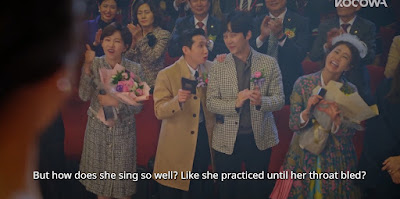
These clips are from the Artger YouTube channel. The site primarily focuses on Mongolian cooking and cuisine. The first clip, in honor of the opera singers in Penthouse: War in Life, features a real Mongolian opera singer who shares a meal with Nargie, the host of the video. They order meat and vegetables from a shop in the city which gets delivered to them, and then they cook it over an open fire. Their jovial conversation is either in English or subtitled. It is a cold day with winter approaching.
The next video is another delivery, this time to a fellow lazing next to a river. He gets the equipment and ingredients for a hot pot. In a hot pot soup is heated and you add whatever you want to stew in it. In a restaurant the soup will be at the table, and you go to a buffet to pick the ingredients you want.
Finally, we have hamburgers and hot dogs. The meat is just shredded beef, and whether it is a hamburger or a hot dog depends on the type of bun you put it on. Still, the sandwiches are tasty looking.
Luck is blind, they say. It can’t see where it’s going and keeps running into people... and the people it knocks into we call lucky! Well, to hell with luck if it's like that, I say! ― Nikos Kazantzakis
Time to review another Korean show. This review is of a makjang drama called
Penthouse: War in Life (you may have to look around a bit to find it, I
watched it on Rakuten Viki). It ran for 3 seasons. I'll try to avoid spoilers,
but some will creep into this review.
A makjang is a show where the plot and situations are deliberately excessive.
A makjang will feature crazy plot twists, birth secrets out the wazoo, revenge
plots, adultery, scheming, fighting, murder and more. Penthouse delivers all
of that in spades. It has great cinematography, a booming orchestral
soundtrack, and lavish sets with over-the-top acting to match its ridiculous
and overblown plot. This all combines together to make a wonderfully
entertaining show.
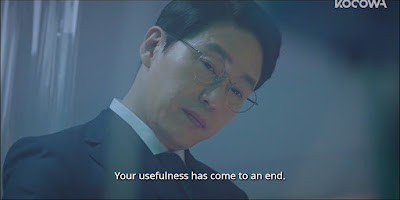
The above video is the very first scene in it. The elegant woman in the
elevator, the party with people dressed like members of Louey XIV's court
waltzing around and the girl who gets tossed off the 47th floor balcony are
all mysteries to set the hook. We then move back two months to find out what
this is all about.
The building they're in is called Hera Palace. It is the choicest piece of
real estate in Seoul. The richest of the rich live there and they all jostle
for social status. Our characters are the very upper crust of the place. We
discover that they are all very competitive, enormously greedy, suffer from an
advanced stage of moral turpitude and are willing to walk all over each other
to get to the very top of the pecking order -- the penthouse.
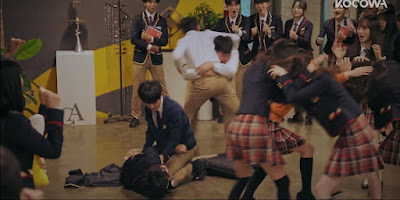
Our opera students engage in one of their frequent brawls
The mystery over who the girl was that got chucked off the balcony, and why
she was murdered, is covered in the first several episodes. It turns out that
the daughters of the rich folks are all opera students at an elite high
school. Yes, you read that right -- opera students. Along with the amusement
factor of watching tiny Korean ingenues belting out arias, we are given our
first hint that logic and reality are not to be expected in this show.
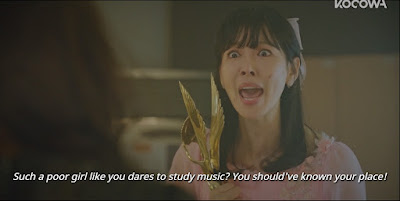
The murdered girl is Min Seol Ah. She is an orphan girl who lives in
Jewelry Village. When she first appears, she is a voice tutor for the rich
opera students. However, when the school year starts, she turns out to be
enrolled in their high school. Since she is poor all of the other students are
aghast to have her as classmate. Throughout the show almost all of the rich
people treat any poor person as subhuman scum that is barely
tolerated.
So, all of the kids hate and bully her. The parents also despise her as well,
thinking that her mere presence besmirches the honor of their school. This is
made worse when Min Seol Ah bests their darling daughters and wins an
important singing competition. In addition, she finds out that two of their
parents are having an affair and holds that over their heads.
The end result is that she ends up tied up in an equipment room and virtually
all of the characters wander in from time to time to slap her around. They all
have the motive, and sketchy enough morals, to be the one who pushed Min Seol
Ah off the balcony.
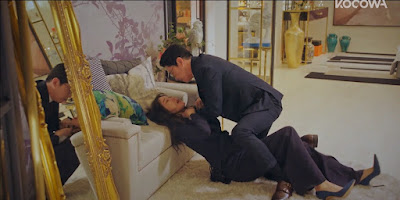
In one of their many marital spats Dan Tae tries to strangle Soo
Ryan
It gets more complicated. Shim Soo Ryun, the elegant woman we saw on the
elevator, is married to Joo Dan Tae. She's the stepmother to his twins,
while her own child has been in the hospital for 16 years in a coma. However,
all is not as it seems. Dan Tae, who is a cheerfully Eeeevil fellow and the
story's main villain, had for some unfathomable reason switched Soo Ryun's
daughter at birth with another kid who he then drugged for 16 years to keep it
in a coma. Well, aside from not making any sense (why not just drug her real
kid?), that's not very nice.
Anyway, Dan Tae's minion was supposed to toss Soo Ryun's baby into a lake.
However, being greedy like everybody else in this show, instead the minion
sold the baby to an orphanage. The orphanage head, being greedy as well,
eventually sold the orphan to a rich American family who needed a bone marrow
donor for their sick son. Once the marrow was donated, the adoptive parents
then framed the orphan for theft which got her unadopted, arrested and
deported back to Korea.
Of course, Min Seol Ah was that baby and Soo Ryun eventually figures this all
out. Needless to say, when she discovers that Min Seol Ah was her birth
daughter, she gets monumentally pissed off and swears to find the murderer and
get revenge on everyone involved.
In this case, everyone involved is pretty much the entire rest of the cast.
Aside from the 'tied up in an equipment room' business, the Hera Palace people
had been planning a fancy party when Min Seol Ah had the audacity to ruin
their plans by flopping into the arms of their beloved statue and splattering
the place with blood. Not wanting the party to be ruined, they clean up the
mess and move Min Seol Ah's body to her dingy apartment in Jewelry Village and
make it look like a suicide. They are all implicated in the crime.
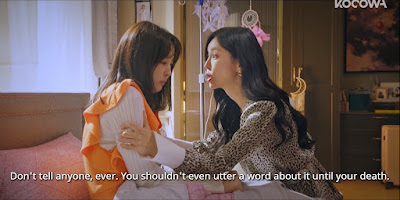
Seo Jin, aka The Mother of the Year, counsels her daughter Eun Byul
to lie through her teeth until the day that she dies
Meanwhile, in another plot thread Cheon Seo Jin, a famous opera singer, wife
of Dr. Ha Yoon Chul and head mistress of the elite opera teaching high
school, gets annoyed by a pecan pie (don't ask) so she throws herself at Soo
Ryun's husband Dan Tae and starts an affair with him.
Seo Jin is also the mother of Ha Eun Byul, another aspiring student opera
singer. Under Seo Jin's expert mothering, Eun Byul gets nuttier and nuttier as
the show goes on until Seo Jin has to feed her an experimental amnesia drug so
Eun Byol can forget about bonking another student over the head, and
apparently killing her, with a trophy they were competing over.
Seo Jin starts as a haughty, arrogant and corrupt woman who gets increasingly
demented as the show proceeds. It can be argued that by the end of the show
she even surpasses Dan Tae as the main villain. Considering what a psychopath
Dan Tae is, that's no easy feat. With her endless scheming and multiple
murders, she's a hurricane of chaos that sweeps through the story.
Seo Jin was my favorite character on the show. She tried to put up a facade of
indifferent elegance like Soo Ryun naturally possessed, but underneath it Seo
Jin was a seething cauldron of ambition and anger. Her frequent outbursts and
tantrums were hugely entertaining.
Kim So-yeon, the actress who played Seo Jin did a fantastic job with the role.
Her over-the-top acting, which suited this drama well, approached the edge but
was always under control. She created a memorable character in the scheming,
power hungry and wicked Seo Jin.
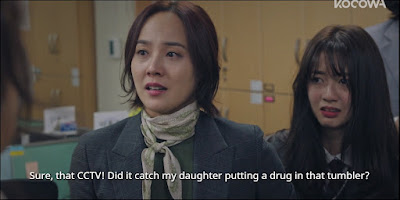
Yoon Hee defends her daughter Ro Na who has once again been framed
for a nefarious deed by her classmatess
The third female lead is Oh Yoon Hee. When we meet her, she is an
ex-opera singer/real estate agent who is struggling to make ends meet. She has
a daughter, Bae Ro Na, who -- no surprise here -- wants to be an opera
singer.
We soon learn that Yoon Hee and Seo Jin have a history and they hate each
other with a passion. They had been opera singing students in the same high
school back in the day. Seo Jin, using the father's influence, had cheated
Yoon Hee out of the top prize in a competition. They got in a fight in the
dressing room and after battering each other with pillows and smashing much
furniture Seo Jin ended it by clobbering Yoon Hee with the trophy. This
damaged her vocal cords and ended her hopes of a career in opera.
Yoon Hee doesn't want Ro Na to pursue a singing career, but Ro Na is
persistent and eventually she gets accepted to the opera singer high school.
This brings Yoon Hee and Seo Jin into direct contact with each other, with
both vowing to destroy the life of the other. Also, since Ro Na is poor,
naturally all the other students hate and bully her and even Seo Jin isn't
above messing with her.
The two women's conflict starts out with verbal sparring and quickly moves
into screaming and regular hair pulling fights. As the show goes on their
schemes against each other get ever more deadly and convoluted, with both
swearing to kill the other.
Dan Tae getting ready to murder somebody
The show's main villain, at least until Seo Jin goes completely off the rails
at the end, is Dan Tae. He's a rich businessman and the owner of the
penthouse. Seemingly cool-headed, he is in fact a psychopath. So he could
marry her for her money he killed Soo Ryun's first husband (and keeps the
fellow's chopped off finger with the wedding ring still on it in a drawer in
his office), he beats his kids, abuses his staff and most of all endlessly
plots to swindle or kill those around him.
And he does all that with a smile. Altogether, he is an extremely cheerful
villain. Nothing seems to lift his spirits quite as much as coming up with a
ridiculously elaborate plan to ruin, cheat or kill somebody.
Of course, his ludicrous schemes never exactly work, but he does leave a trail
of mayhem and bodies in his wake, and aside from frequently beating his
faithful but inept minion to a bloody pulp because he botched things, he never
gets too frustrated by their failure.
(L-R) Go Sang Ah, Lee Gyu Jin, Ha Yoon Chul, Kang Ma Ri
There are a number of supporting characters that get a lot of screen time.
Among them are Sang Ah, the bubble-headed former TV presenter who is the wife
of Gyu Jin, a money-grubbing, mamma's-boy lawyer that delights in the
misfortunes of others. The hapless Dr. Yoon Chul is Seo Jin's cuckolded
husband. Ma Ri claims her husband is in Dubai, but he's actually in prison
taking the fall for one of Dan Tae's earlier murders. She puts on airs of
being wealthy but is actually a masseuse at a spa.
In addition, and not pictured, is the mysterious Logan Lee who shows up
halfway through the first season and has an important role in all this
foolishness. There are also a number of teachers, students, minions,
staff, family members and others who act as foils, companions and accomplices
to our main characters.
Even as a high school student Seo Jin was an insufferable snob
Most of the above is only from the first few episodes. Penthouse hits the
ground running and never eases up, with virtually no filler or down spots. It
has at least one, and generally more, plot twists per episode so one is never
sure where it is going next.
A makjang is deliberately over-the-top. With its ludicrous situations and
characters all it is aiming for is entertainment. Penthouse succeeds in
delivering that entertainment. There is also a lot of humor sprinkled in and many memorable characters: our vengeance-minded heroine Soo Ryun, the Eeeevil Dan
Tae, Seo Jin and her nutty daughter Eun Byul. The supporting characters are
all fleshed out and interesting as well.
The production values are top-notch. The directing is crisp, and the
cinematography and sets are gorgeous. Much of the dialog crackles, and the
orchestral soundtrack is outstanding. As absurd as much of its plot is, it is
really a well written, produced and acted show. Two thumbs up from me.
Finally, after the jump I've included a few more clips from the show (be sure to turn the captions on). They are
spoilerish, but don't really give away much.
Although it would be better than swimming with the fishies, I would hate to be stuck on one of these for days on end. I am surprised that there are no straws available in case, if the situation gets dire enough and there are no sick cabin boys handy, lots need to be drawn to see who eats who.
These are USDA (United States Department of Agriculture) posters from WWI through the Great Depression and up until WWII. While some are informational, most do a lot of exhorting. Sadly, I suspect that these days some folks will get a tingle from the below rationing poster -- fair share and all that.
Shin Fujiyama, a Japanese fellow who previously lived in Viginia but now lives in Honduras, takes a bus to a town called La Lima. Once there he visits street venders, a market, a police station and one of the schools his organization helped build. He can't show his visit to the 2nd school, because a local gang stopped him and erased his video from that visit.
He's a talkative fellow, turn on the captions to follow his conversations with the locals he meets.
I figure you folks in the northern regions who freezing your you-know-whats off would appreciate some beach pictures. Unfortunately for you, instead of getting bikinis or stud muffins I settled on pictures of old-timey lifeguards Eh, it still beats snow and ice.
I'm by no means a master mechanic, but doesn't it seem like these guys really bang around that old engine block getting it off the truck and into the shop? In the comments, when talking about dropping it off the truck the funniest one was "Без работы они никогда не останутся" which Google translates to "They will never be out of work".
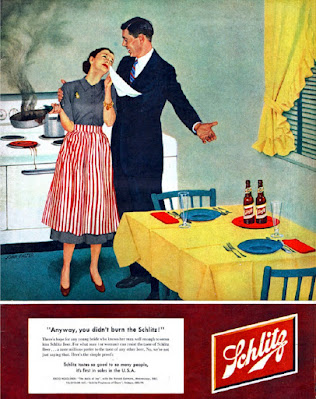
There is a genre of clickbait that teases old ads that would never be acceptable today. The above ad is often featured, because any mention of a female in a domestic setting is a sin against nature to a certain segment of modern damsels (btw, a bit of useless trivia -- damsel comes from the French word damoiselle and the male equivalent is damoiseau, so I guess us guys would be a damseau?).
I just took the ad to be a joke. Curiously enough, when I was dating Mrs. Sinistral the first time she invited me to her apartment she burned steak she was cooking and got upset like the woman in the ad. However, to console her over the charred steak I didn't counter that the beer was OK -- and I doubt that would have worked. Besides, and how can I say this delicately... the steak was not my priority that night anyway, so I cleverly employed different tactics.
Below, and after the jump, are more old beer ads. Since guys are generally buying the beer they feature a lot of pretty women and/or convivial settings. Enjoy.
This is a 4,000-year-old recipe for a Babylonian stew. It is one of the oldest recipes we know. It is thought it was used for a Spring Festival, which was the Babylonian New Year. He also describes the festival's ceremonies,